What Are Dental Postcards in Dental Marketing?
What are dental postcards? Learn how dental postcard marketing works, what effective mailers include, and how dentists can track responses, patients, and ROI.

Ashley Paige Lloyd
marketing consultant
·30 min read
·Mar 12, 2025


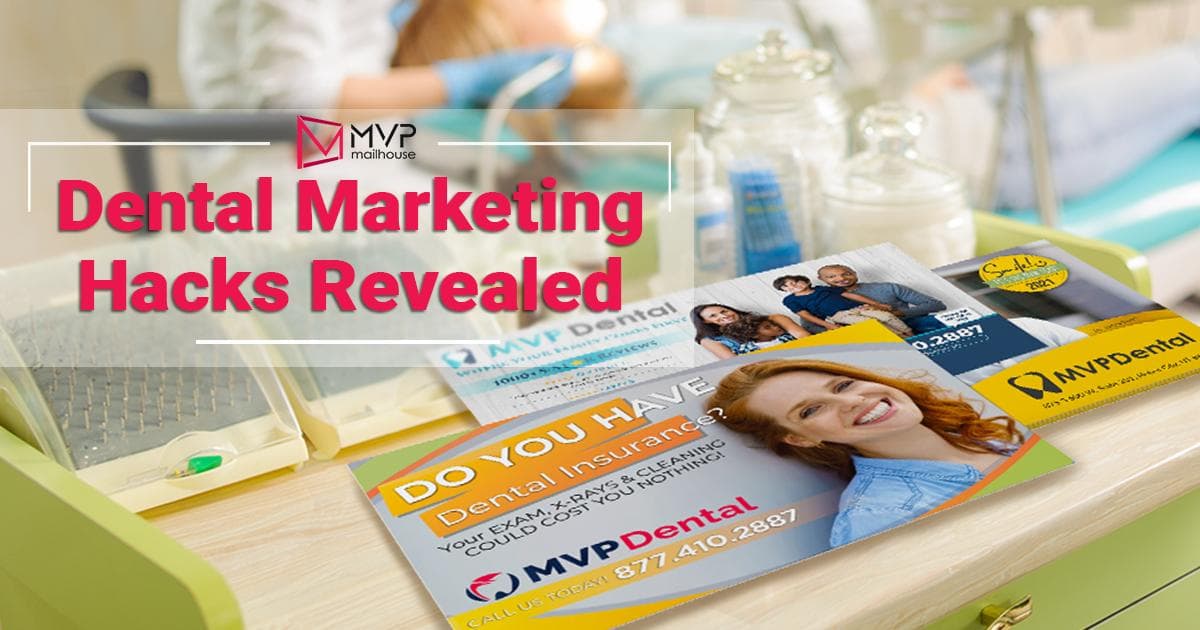
What are dental postcards? They are printed marketing pieces that dental practices send directly to households to introduce the practice, promote a service, communicate an offer, or encourage recipients to schedule an appointment.
They may look simple, but their job is demanding. A dental postcard has only a few seconds to get noticed, explain why the message matters, build enough trust to create interest, and give the recipient an easy next step.
That matters because physical mail still gets attention. USPS research found that physical advertisements can create stronger memories than digital ads across age groups. USPS has also reported that 66% of millennials use marketing mail as a prompt to go online at least occasionally. (USPS, USPS)
For dental practices, that creates a useful bridge between offline visibility and online action. Someone receives a postcard at home, recognizes a dental need, then calls the office, scans a QR code, searches for the practice, or visits its website.
This guide explains what dental postcards are, how dental postcard marketing works, what a strong mailer should contain, and what practices should realistically expect from a campaign.
What Are Dental Postcards?
Dental postcards are a form of direct mail for dentists designed specifically around the needs of dental practices and their potential patients.
Unlike an email or paid search ad, the message arrives physically at a household. There is no inbox to open and no social feed competing for the same screen. The recipient can see the practice name, message, offer, phone number, and other key information directly on the mail piece.
A postcard might promote a new-patient special, dental implants, cosmetic dentistry, emergency appointments, clear aligners, teeth whitening, pediatric dentistry, or another service.
It can also have a broader goal. A new practice may use postcards simply to introduce itself to nearby households. An established office might mail surrounding neighborhoods to increase local awareness or stay visible between appointments.
In practice, the strongest postcards usually have one primary purpose. Trying to promote six services, three offers, every insurance option, and the dentist's full biography on one card often weakens the message. The recipient should understand the main point within seconds.
This is one reason design matters so much. Our guide to design tips for dental postcards covers how hierarchy, imagery, copy, offers, and layout can make the message easier to understand.
Physical advertising has another advantage. USPS cites research showing that physical advertisements produced stronger memory responses than digital ads. That does not mean every postcard will perform well. It means print has characteristics that can help a clear message stick when the creative and targeting are right. (USPS)
How Dental Postcard Marketing Works
Dental postcard marketing combines three basic elements. The practice chooses an audience, creates a relevant mail piece, and sends it to selected households with a clear way to respond.
The process often looks like this.
1. Define the campaign goal.
The practice decides what the postcard needs to accomplish. That could be generating new-patient appointments, promoting implants, announcing a new location, filling hygiene openings, or increasing awareness in a particular neighborhood.
2. Select the mailing audience.
The campaign is sent to households based on geography or other available targeting criteria. For a local dental office, distance matters because most patients do not want an unnecessarily long trip for routine care.
3. Build the message around that audience.
The headline, imagery, offer, and service should match the intended recipient. A family dentistry postcard should not read like an implant campaign aimed at older adults.
4. Mail the postcards.
The finished pieces enter the postal system and arrive directly at homes within the selected mailing area.
5. Give recipients a measurable next step.
The postcard may direct people to call a tracked number, scan a QR code, visit a landing page, or mention a specific offer when scheduling.
6. Measure what happens.
The practice tracks responses, booked appointments, new patients, treatment value, and campaign cost.
This last step is where many campaigns fall short. A practice may know that the phones were busy after a mailing but still have no reliable way to connect those calls with the postcards.
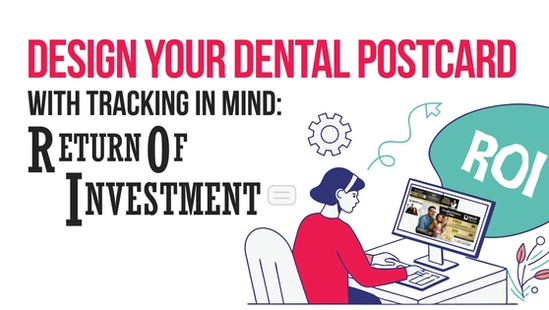
We prefer treating measurement as part of the campaign from the beginning rather than adding it afterward. Unique phone numbers, campaign landing pages, QR codes, promotional codes, and consistent front-desk tracking can make attribution much clearer. Our guide to dental postcards that track ROI effectively explains this approach in more detail.
The wider direct marketing industry takes the same measurement problem seriously. The Association of National Advertisers' 2023 Response Rate Report benchmarks direct marketing channels and evaluates campaign performance across direct mail, email, paid search, social media, SMS, and digital display. (ANA 2023 Response Rate Report)
For a dental practice, though, the most useful KPI is rarely response rate by itself. What matters is what those responses become.
A campaign that generates 30 calls but only two qualified appointments may be less valuable than one that generates 15 calls and eight new patients. Track the full path from mail delivered → response → appointment → patient → treatment revenue.
Why Dental Practices Use Postcards
Dental care is unusually local.
Most practices depend heavily on people living or working within a reasonable distance of the office. That makes geographic targeting valuable. Instead of paying for broad exposure across an entire metro area, a practice can concentrate its message around neighborhoods it can realistically serve.
Postcards also allow practices to reach people before they actively search for a dentist.
Search marketing typically captures existing intent. Someone searches for a "dentist near me" because a need already exists. Direct mail marketing can introduce the practice earlier. A household may receive the postcard today, keep it on the counter, and remember the name weeks later when someone needs an appointment.
We've seen this happen with campaigns where the postcard does not create an immediate phone call but contributes to later branded searches, website visits, or appointment requests. That is why evaluating dental direct mail only by same-day calls can miss part of its impact.
USPS data illustrates how physical mail can trigger digital behavior. Among millennials surveyed in research cited by USPS, 66% said they frequently or occasionally use marketing mail as a prompt to go online. And 52% were more likely to purchase from a company that advertised using both direct mail and digital methods. (USPS)
That behavior is particularly relevant to modern dental practice marketing. A postcard does not need to replace the practice website, Google presence, paid search, or other digital channels. It can feed those channels by creating the first point of recognition.
For more context, see why direct mail marketing still works in dentistry.
What Does a Dental Marketing Postcard Contain?
Effective dental marketing postcards are usually simple enough to scan quickly but detailed enough to establish credibility.
Most successful pieces include a few core elements.
- A clear headline. The reader should immediately understand why the postcard matters. "New Patients Welcome" communicates more quickly than a clever headline that requires interpretation.
- The main service or offer. If the campaign is about implants, implants should be prominent. If the goal is attracting new families, the message should make that clear.
- Practice identity. The dental office name, logo, and relevant branding should be easy to recognize.
- Location information. Because dentistry is local, recipients need to know where the practice is located. Mentioning a recognizable neighborhood or nearby landmark may help when appropriate.
- Trust signals. These can include the dentist's credentials, patient reviews, years in practice, financing availability, technology, or other factual reasons a prospective patient might feel comfortable taking the next step.
- A clear call to action. Tell the recipient what to do. "Call to schedule your new-patient visit" is more useful than simply placing a phone number at the bottom of the card. Our guide on how to write a call to action in direct mail marketing explains how to make that instruction more specific.
- A response mechanism. A phone number, website, QR code, or combination of these options gives people a convenient way to act.
QR codes are particularly useful when the destination matches the postcard message. An implant postcard, for example, should ideally send the recipient to a relevant implant page rather than the website homepage. USPS specifically recommends integrating QR codes and other digital elements into direct mail when connecting recipients with online content. (USPS PDF)
You can read more about the benefits of using QR codes in direct mail marketing.
But adding more elements does not automatically make a postcard stronger. We've seen this happen when practices try to use every inch of available space. The result becomes crowded, the main offer disappears, and the recipient has no obvious place to look first.
A better rule is simple. Every element should help the recipient understand who the practice is, why the message matters, and what to do next.
Dental Postcards Are More Than Small Advertisements
A well-planned dental postcard is not simply a printed version of a digital ad.
It combines local targeting, physical visibility, branding, an offer or service message, and a measurable response path in one piece. And unlike an online impression that disappears as soon as someone scrolls, a postcard can remain in the home until the recipient decides what to do with it.
Historical USPS household research helps illustrate that behavior. In its FY2008 Household Diary Study, 79% of households reported either reading or scanning advertising mail. Of the advertising mail measured, 49% was read and another 30% was scanned. (USPS Household Diary Study)
Those figures are historical and should not be treated as current dental postcard response rates. USPS now conducts its Household Mail Survey annually with a representative sample of roughly 5,200 U.S. households, which shows that household mail behavior continues to be formally measured. (USPS Household Mail Survey)
The practical point is simpler. Getting into the mailbox is only the first step.
A dental postcard still has to earn attention once it arrives. The right audience, message, design, format, offer, and tracking system determine whether that physical impression turns into measurable patient acquisition.
And one of those decisions starts before the design is finished. The physical dimensions of the mailer affect available space, visual hierarchy, cost, and how noticeable the piece feels in the mailbox. Our guide to the best postcard size for dental direct mail success explains how to choose a format based on the campaign rather than simply picking the largest card available.
Types of Dental Postcards
Not every dental postcard should look or read the same. The format should match the reason for mailing and the type of patient the practice wants to reach.
A postcard designed to introduce a new dentist has a different job from one promoting dental implants. The first needs to establish familiarity and trust. The second needs to communicate a specific treatment, address common barriers, and create a clear path toward consultation.
In practice, most dental postcard marketing campaigns fall into a few categories.
New Patient Postcards
New patient postcards introduce the practice to people who may not already have a dentist in the area.
They usually focus on location, convenience, accepted insurance or payment options, services, the dentist, and a new-patient offer when appropriate. The message should answer the recipient's basic concern quickly. Why should this practice be considered the next time dental care is needed?
This type of campaign works best when the mailing area matches the practice's realistic service area. Sending more postcards is not automatically better if thousands of those pieces reach households unlikely to travel to the office.
Service-Specific Postcards
These campaigns focus on one treatment such as dental implants, clear aligners, cosmetic dentistry, dentures, emergency dentistry, or teeth whitening.
A narrower message can be powerful because there is less competition for the recipient's attention.
For example, an implant postcard does not need to explain every preventive and cosmetic service offered by the practice. The headline, image, supporting copy, and response method can all focus on implant patients.
That clarity matters. USPS guidance recommends giving recipients a clear action and notes that response can be tracked through tools such as dedicated phone numbers, QR codes, and personalized URLs. (USPS)
Practice Announcement Postcards
Dental offices can also use postcards when something changes.
A practice may be opening a new location, welcoming a new dentist, expanding its hours, introducing new technology, or moving offices.
The objective is less transactional. The postcard creates awareness so that the practice becomes familiar before dental care is needed.
Patient Reactivation Postcards
Direct mail does not have to target only new patients.
A practice can mail inactive patients who have not returned within a defined period, provided the campaign complies with applicable privacy, advertising, and patient communication requirements.
The message can remind them about the practice and give them a simple reason to reconnect. This can be particularly useful when an office has a large inactive patient database but has historically focused most of its marketing budget on acquiring completely new patients.
The important distinction is that acquisition and reactivation should not be measured identically. A returning patient already knows the practice. A prospect receiving a postcard for the first time does not.
How to Choose the Right Dental Postcard Size
Postcard size affects more than appearance. It determines how much information fits comfortably, how prominently the piece can present an offer, and how the mailer appears alongside other items in the mailbox.
Common postcard dimensions include 4.25" × 6", 6" × 9", and larger oversized formats. The right choice depends on the campaign rather than a universal "best" size.
A smaller postcard can work for a simple announcement with limited copy. A larger format gives more room for treatment details, photographs, trust signals, financing information, and a prominent call to action.
But larger does not automatically mean better.
We've seen campaigns lose clarity because the extra space encouraged the practice to add more copy. More room became more services, more badges, more images, and multiple competing calls to action.
Size should create breathing room, not an excuse to fill every available inch.
For a broader breakdown of dimensions and mailing considerations, see our guide to postcard sizes for direct mail marketing.
The format should ultimately support the message. If a recipient has to search around the card to understand the offer, the additional space has not helped.
What Makes Dental Postcard Design Effective?
A postcard can reach exactly the right household and still fail because of poor design.
People do not read direct mail the way they read an article. They scan first. The visual hierarchy has to communicate the important information before asking the recipient to read smaller supporting copy.
That means the design should establish a clear order.
The main headline gets attention. The service or benefit explains relevance. Supporting information builds confidence. The call to action tells the recipient what happens next.
Across campaigns, one of the most common mistakes is treating every element as equally important. The practice logo is huge. The offer is huge. The phone number is huge. Four service names are bold. Several colors compete for attention.
Nothing stands out because everything is trying to stand out.
Good dental marketing postcards make choices.
The reader should be able to glance at the piece and identify the practice, understand what is being offered, and find the next step without reading every word.
This is particularly important because USPS guidance on direct mail emphasizes making the desired action quick and easy. Its health-industry research specifically recommends response mechanisms such as QR codes, unique campaign phone numbers, and personalized URLs. (USPS)
Our breakdown of how design impacts direct mail response rates explains how visual decisions can support or weaken that response path.
How Much Information Should Be on a Dental Postcard?
Enough to create interest and confidence. Not enough to explain an entire treatment plan.
This distinction is important.
A postcard about dental implants does not need to teach the recipient everything about implant surgery, osseointegration, abutments, crowns, bone grafting, and recovery. Its job is to make the practice relevant enough that an interested person takes the next step.
Think of the postcard as the beginning of the patient journey rather than the entire journey.
For example, an implant postcard could communicate the treatment, a patient-centered benefit, the dentist or practice, an appropriate offer or financing message, a few trust signals, and a clear response option.
The website or consultation can handle deeper education.
This is where physical and digital marketing work well together. USPS reports that direct mail can drive online behavior, while its more recent guidance emphasizes integrating physical mail with digital data and measurement rather than treating the two channels separately. (USPS)
That gives dental practices a useful division of labor. Let the postcard earn attention. Let the landing page provide depth. Let the front desk or consultation convert interest into an appointment.
Dental Postcard Offers Should Match the Patient
An offer can improve the reason to respond, but it needs to make sense for the service and audience.
A new-patient campaign might feature an introductory exam package when appropriate. A cosmetic campaign may focus on a consultation. An implant campaign might highlight financing availability or a specific consultation offer.
The offer should never overpower the actual reason someone would choose the practice.
Price alone rarely answers questions about trust, location, experience, convenience, or treatment quality. And an aggressive discount can attract responses that do not necessarily become the right patients for the practice.
In practice, we prefer offers that remove a reasonable barrier to taking the next step rather than offers designed simply to make the largest number on the postcard.
The goal is not the cheapest possible lead. It is acquiring patients who schedule, show up, accept appropriate treatment, and generate enough value to justify the campaign.
That difference becomes important when calculating ROI.
Targeting Matters as Much as the Postcard
Strong creative cannot compensate for a poor mailing list.
A beautifully designed postcard sent to the wrong households is still the wrong campaign.
For most dental practices, geography should be one of the first considerations. Patients typically have many dental offices available to them, so proximity can influence which practices enter their consideration set.
But distance is only one variable.
Depending on the campaign and the data legally available for marketing use, targeting may consider household characteristics relevant to the campaign. The important principle is to avoid assuming that every household near the office represents the same opportunity.
A general family dentistry campaign may benefit from broad local coverage. A higher-value treatment campaign may justify a more selective audience strategy.
The mailing radius should also be tested rather than accepted as a permanent rule.
Suppose a practice mails 10,000 postcards across a broad area and receives 50 tracked responses. That is a 0.5% response rate. If a tighter 5,000-household segment generates 40 responses, its response rate is 0.8%.
The smaller mailing produced fewer total responses, but it generated substantially more responses per piece.
That information can shape the next campaign.
USPS research reinforces the importance marketers place on targeting. In a 2024 Winterberry Group study published by USPS, 29% of brands that increased direct mail spending cited better targeting as a reason for spending more, while another 29% cited the availability of better data. (USPS/Winterberry Group 2024 Report)
For dentists, better targeting can mean spending less of the campaign budget reaching households that are unlikely to become patients.
How Often Should Dental Practices Send Postcards?
One mailing can generate responses, but direct mail for dentists is often more useful when treated as a campaign rather than a single event.
People do not need dental services on the same day.
One household may be actively searching for a dentist when the first postcard arrives. Another may become interested two months later after moving, changing insurance, developing a dental problem, or deciding to pursue elective treatment.
Repeated exposure can therefore increase the chance that the practice is familiar when the need appears.
That does not mean mailing the same postcard every week.
Frequency should reflect campaign economics, audience size, treatment value, budget, and previous performance. A practice might test several drops over a defined period, measure each one, then adjust the audience or creative.
A useful initial testing window is often measured in months rather than days. The first mailing establishes a baseline. Later drops help reveal whether the audience, message, offer, and frequency are producing consistent results.
Avoid making major conclusions after a tiny sample.
If 500 postcards produce three patients, one additional patient changes the apparent performance dramatically. Larger samples and repeated campaigns usually provide more useful evidence.
The Association of National Advertisers maintains response-rate benchmarking specifically to help marketers evaluate direct marketing performance across channels and business types. Its 2023 report includes direct mail alongside email, paid search, social media, SMS, and digital display. (ANA 2023 Response Rate Report)
Benchmarks are useful, but your own campaign history becomes more valuable over time.
What Is a Good Response Rate for Dental Postcards?
There is no single response rate that every dental practice should expect.
USPS guidance has previously cited an average direct mail response range of roughly 5% to 9%, while stressing that results vary substantially according to industry, audience, product, and campaign quality. (USPS)
Industry-specific research shows why broad averages require caution. USPS research on the health sector reports that surveyed health businesses most commonly reported direct mail response rates between 11% and 15%, with health companies more likely than the other surveyed industries to report rates above 25%. Those figures cover health businesses generally, not dental postcard campaigns specifically, so they should not be treated as a promised dental benchmark. (USPS)
For a dental practice, response rate also needs a clear definition.
Does a QR scan count? What about a phone call? A completed appointment request? A booked consultation? A patient who actually arrives?
The answer changes the number significantly.
For that reason, we recommend separating at least four metrics.
Response rate measures how many recipients respond.
Appointment rate measures how many responses become scheduled appointments.
Show rate measures how many scheduled prospects actually arrive.
Patient acquisition rate measures how many mailed households ultimately become patients.
A campaign can have a modest response rate and still be profitable if those responses become high-value patients. Another can generate plenty of calls but produce poor financial results because few callers schedule or show.
For a deeper benchmark discussion, see what a good response rate for direct mail marketing looks like.
Measure Dental Postcards by Patients, Not Just Responses
This is where the economics of dental practice marketing become more useful than surface-level metrics.
Imagine a practice mails 10,000 postcards.
The campaign generates 80 tracked responses. That produces a 0.8% response rate.
Of those 80 responses, 40 schedule appointments. Thirty-two show up. Twenty-five become patients.
The campaign therefore produced a 0.25% patient acquisition rate from the original mailing.
Now suppose the total campaign cost was $7,500.
The cost per response was $93.75.
But the more meaningful number is the $300 cost per acquired patient.
Whether that result is good depends on what those patients are worth to the practice.
If the average acquired patient generates enough gross profit over an appropriate measurement period to comfortably exceed acquisition costs, the campaign may be economically sound even though less than 1% of mailed households initially responded.
This is why focusing on response rate alone can lead practices in the wrong direction.
ANA's 2023 Response Rate Report specifically examines campaign ROI across direct mail and several digital channels, reinforcing that response is only one part of evaluating direct marketing performance. (ANA)
A dental practice should ultimately connect campaign activity to business outcomes.
Track the mail quantity, responses, appointments, show rate, acquired patients, campaign cost, treatment revenue, and, when possible, longer-term patient value.
Once that data exists across several campaigns, decisions become much easier.
Instead of asking whether postcards "work," the practice can identify which audience, message, offer, format, and mailing frequency produce the strongest patient acquisition economics.
That is the level at which dental postcard marketing becomes a repeatable system rather than a one-time advertising experiment.
Common Dental Postcard Mistakes
Most underperforming dental postcards do not fail because postcards themselves are ineffective. Problems often start with the audience, message, design, offer, tracking, or follow-up process.
One common mistake is trying to make one postcard do too much.
A practice might promote preventive care, implants, veneers, whitening, emergency dentistry, clear aligners, and financing on the same mailer. Each service may matter, but together they compete for attention.
A stronger approach gives the recipient one primary reason to respond.
Another mistake is prioritizing appearance over communication. A postcard can look polished while making the phone number difficult to find or burying the main offer beneath several blocks of copy.
Across campaigns, we've seen this happen when every stakeholder wants one more item added to the design. Eventually, there is no visual hierarchy left.
The most effective creative usually feels simpler because the practice has made deliberate choices about what matters.
Other problems happen after the postcard generates interest. Calls go unanswered. Front-desk employees do not know about the offer. Nobody asks new patients how they heard about the practice. QR codes lead to generic pages that do not match the mailer's message.
The postcard cannot compensate for a weak response process.
Connect the Postcard to the Patient Journey
Think beyond what happens in the mailbox.
A prospective patient may receive the postcard, scan a QR code, visit the practice website, read reviews, check the location, compare providers, and then call several days later.
That entire path matters.
Google reported that 76% of people who conduct a local search on a smartphone visit a related business within a day, while 28% of those searches result in a purchase. The research covers local search broadly rather than dentistry specifically, but it illustrates how quickly local digital research can turn into offline action. (Think with Google)
A dental postcard can become the trigger that starts that research.
That is why the website, Google Business Profile, reviews, landing page, and phone experience should reinforce what the recipient saw in the mailbox.
If the postcard promotes dental implants but the QR code sends people to a generic homepage where implants are barely mentioned, unnecessary friction has been added.
The transition should feel natural.
Postcard → relevant landing page → clear information → appointment request.
Or simply
Postcard → phone call → informed front desk → scheduled appointment.
The fewer unnecessary steps, the easier the campaign is to act on and measure.
Track Dental Postcard ROI
A practice should know more than how many postcards were mailed.
At minimum, track campaign cost, responses, booked appointments, completed appointments, new patients, and revenue attributed to those patients.
The basic ROI calculation is
ROI = (Revenue attributed to the campaign - campaign cost) ÷ campaign cost × 100
Suppose a practice spends $8,000 on a postcard campaign and attributes $20,000 in collected revenue to patients acquired through that mailing.
The calculation is
($20,000 - $8,000) ÷ $8,000 × 100 = 150% ROI
That means the campaign generated $1.50 in return above the original campaign cost for every dollar spent, before considering other practice expenses.
But timing matters.
Some dental treatments have longer decision cycles. A patient who responds to an implant postcard this month might schedule a consultation quickly but begin treatment several weeks later. Other new patients may start with an exam and produce additional value through future treatment and recall visits.
For that reason, reviewing only the first few days after delivery can underestimate campaign value.
Use a defined attribution period and apply it consistently. Depending on the campaign, practices may review early indicators within the first few weeks, then assess patient and revenue outcomes over a longer window.
The important part is consistency. Changing the measurement method whenever a campaign performs differently makes comparison difficult.
Use Tracking That Matches the Campaign
A measurable campaign needs identifiable response paths.
A dedicated phone number can show how many calls originated from the campaign. A QR code can identify scans. A campaign-specific landing page can track visits and form submissions. An offer code can provide another attribution point.
None of these methods is perfect on its own.
Someone might see the postcard and later search for the practice name rather than scan the QR code. Another recipient might call a phone number found on Google instead of the one printed on the mailer.
That is why front-desk attribution remains useful.
Ask new patients how they heard about the practice and record the answer consistently in the practice's tracking system.
The goal is not perfect attribution. It is enough reliable information to make better decisions.
How to Improve Dental Postcard Results
Optimization should happen one variable at a time whenever possible.
If a practice changes the mailing area, postcard size, headline, offer, imagery, landing page, and call to action simultaneously, it becomes difficult to identify what caused the result.
Start with the largest likely constraint.
If responses are low, examine the audience, message, offer, and creative.
If responses are healthy but few people schedule, review call handling and the appointment process.
If appointments are booked but the show rate is poor, the problem may sit further down the patient journey.
If plenty of patients are acquired but ROI remains weak, examine acquisition cost, treatment mix, and patient value.
This framework prevents the postcard from being blamed for problems occurring elsewhere.
Creative testing matters too. A different headline or layout can change how quickly recipients understand the message. For practical ways to improve campaign performance, see how to increase direct mail response rates.
The important point is to test with a purpose.
Do not change a postcard simply because the team is tired of looking at it. Change something because campaign data suggests a specific part of the process can improve.
Set Realistic Expectations for Dental Postcard Marketing
Dental postcard marketing should not be judged like an instant lead source.
Mail needs to be printed, delivered, noticed, considered, and acted upon. Then the practice needs to convert that response into an appointment and the appointment into a patient.
Some responses may happen shortly after delivery. Others can appear later because the household keeps the postcard or remembers the practice when a dental need develops.
This creates several layers of KPIs.
Early campaign indicators can include calls, QR scans, landing-page visits, and appointment requests.
Conversion indicators include appointments booked, show rate, and new patients acquired.
Financial indicators include cost per patient, attributed production or collected revenue, and campaign ROI.
Monitor all three levels.
A campaign that looks quiet during its first few days should not automatically be declared unsuccessful. But a weak campaign should not be allowed to run indefinitely either.
Establish measurement periods before launch. Review early response after delivery, patient acquisition over the following weeks, and financial outcomes once enough patients have moved through the appointment and treatment process.
That creates a much more useful picture than judging the campaign from phone activity alone.
Dental Postcards Work Better as Part of a Broader Marketing System
Direct mail and digital marketing do not need to compete for the same role.
They can support each other.
A postcard can introduce the practice. Search results can validate it. Reviews can establish confidence. The website can explain treatment. Retargeting can reinforce awareness. The front desk can convert the response into an appointment.
This matters because consumer journeys rarely stay inside one channel.
USPS reports that 68% of surveyed marketers said combining digital and direct mail increased website visits, while 60% reported increased ROI. These are marketer-reported results across industries rather than guaranteed outcomes for dental practices, but they support using physical and digital channels together. (USPS)
This is how we prefer to think about direct mail marketing for a dental practice.
The postcard creates a physical touchpoint in a defined local market. Digital channels then give interested recipients more ways to research the practice and respond.
When those pieces share the same message, offer, branding, and tracking structure, the campaign becomes easier for patients to understand and easier for the practice to evaluate.
When Should a Dental Practice Change Its Campaign?
Do not redesign everything after one disappointing mail drop.
First identify where performance is breaking down.
If very few recipients respond, examine targeting, creative, service relevance, and the offer.
If people respond but do not schedule, review how calls and online leads are handled.
If patients schedule but frequently cancel or fail to appear, investigate confirmation and follow-up procedures.
If patients arrive but the economics are weak, compare campaign cost with patient value.
And if the campaign consistently generates profitable patients, avoid changing it simply for the sake of novelty.
We've seen marketers replace functioning creative because it feels old internally. The audience does not see the postcard every day the way the marketing team does.
Performance should drive the decision.
Make meaningful changes when the data gives you a reason.
What Dental Practices Should Measure Over Time
Individual campaigns provide information. Repeated campaigns create benchmarks.
After several mailings, a practice should begin building its own performance history.
Track metrics such as mailing volume, cost per piece, response rate, appointment conversion rate, show rate, patient acquisition rate, cost per acquired patient, attributed revenue, and ROI.
Over time, compare those figures by audience, ZIP code, service, offer, postcard size, creative concept, and mailing period.
That data can answer increasingly specific questions.
Which neighborhoods consistently produce patients?
Which services generate the most valuable responses?
Does one offer attract more calls but lower-value patients?
Which postcard format produces the best economics?
How many mailings are usually needed before performance stabilizes?
These answers are more useful than a broad industry benchmark because they describe the practice's actual market.
The objective is not simply to send more mail. It is to make each campaign more informed than the previous one.
Conclusion
So, what are dental postcards? They are targeted direct mail pieces that help dental practices introduce their brand, promote specific services, communicate offers, and turn nearby households into measurable patient opportunities.
But the postcard itself is only one part of the system.
Strong dental postcard marketing starts with the right audience and a focused message. It needs clear design, a relevant offer, an obvious response path, and reliable tracking. And once someone responds, the website, landing page, reviews, and front desk need to support the same message.
Practices should also measure more than response rate. Track appointments, show rates, acquired patients, cost per patient, attributed revenue, and ROI. Give campaigns enough time and volume to produce useful data, then use those results to improve the next mailing.
We've seen the biggest difference when practices stop treating direct mail as a one-time postcard drop and start treating it as a measurable patient acquisition process. Each campaign provides information that can sharpen targeting, creative, offers, and spending decisions.
Dental postcards are not a shortcut to predictable growth. But when the audience, message, follow-up, and measurement work together, they can become a practical part of a consistent local marketing strategy.
If your practice wants to build a more measurable direct mail program focused on consistent patient acquisition rather than simply sending postcards, visit our website to learn how MVP Mailhouse can help you plan, target, execute, and track your next dental direct mail campaign.
Tags
Design and Creativity
Frequently Asked Questions
Related blog


Ready For Your Success Story?
Get 500 Free Handout cards shipped right to your doorstep!