How to Market Invisalign: 12 Strategies to Get More Patients
How to market Invisalign with 12 proven strategies covering SEO, direct mail, Google Ads, reviews, referrals, and more to attract qualified patients.

Michael Stephen Hohl
marketing consultant
·24 min read
·Aug 18, 2026


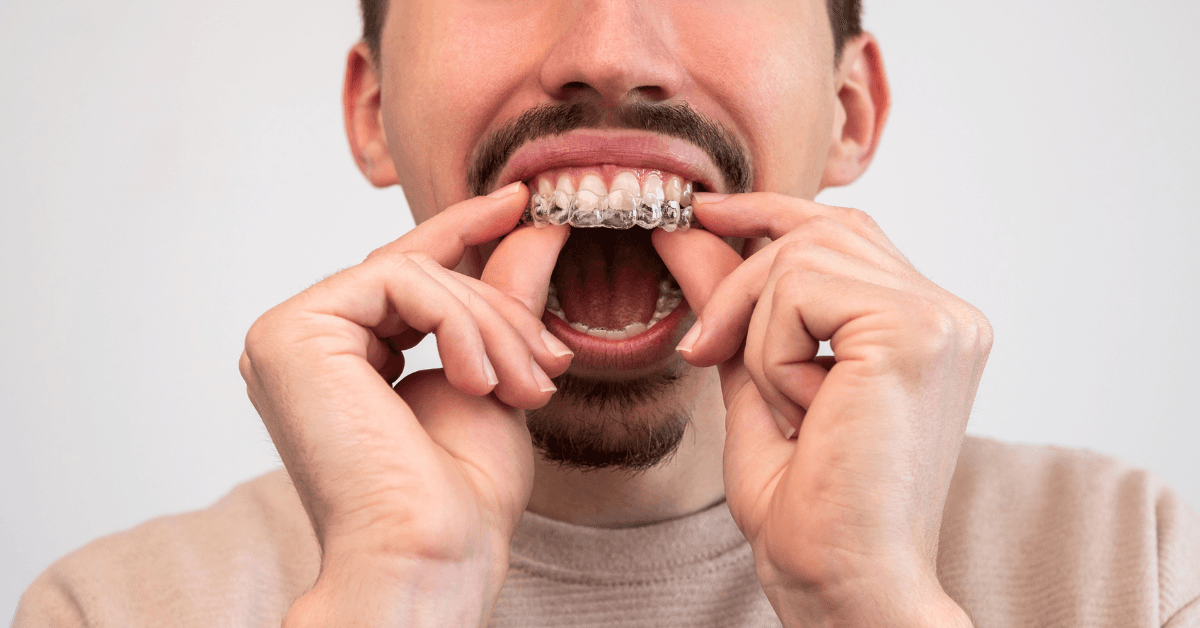
Learning how to market Invisalign is less about convincing people that clear aligners exist and more about giving interested patients a reason to choose your practice.
Demand is already substantial. The American Association of Orthodontists reported that approximately 1.91 million adults were receiving orthodontic treatment from AAO members in the United States in 2024, up from 1.64 million in 2022. The average AAO member also had 696 patients in active treatment, the highest level recorded since its patient census began in 1987. (AAO, 2025)
Clear aligners sit directly inside that growing adult market. But demand does not automatically translate into consultations for an individual practice.
Patients still compare providers, search locally, look at before-and-after results, assess financing, read reviews, and decide whether treatment feels worth the commitment.
That is where Invisalign marketing for dentists needs to become more deliberate.
A strong campaign should connect several channels rather than depend on one source of leads. Search captures people already researching treatment. Direct mail introduces the offer to qualified households nearby. Social media builds familiarity. Reviews reduce uncertainty. Your website turns that attention into booked consultations.
Here are 12 practical Invisalign marketing ideas for building that system and generating more qualified patient opportunities.
1. Build a Dedicated Invisalign Landing Page
Your Invisalign campaign should not send every prospect to the homepage.
Create a dedicated page built around the decision the visitor is trying to make. Someone searching for Invisalign is usually further along than a person searching for a general dentist. They want to know whether treatment is suitable for them, how much it might cost, what the process involves, and why they should trust your practice.
The market justifies giving these visitors their own conversion path. The AAO estimates that 50% to 75% of people could benefit from orthodontic treatment, while one in three orthodontic patients is an adult. (AAO Press Room)
A useful Invisalign landing page should cover treatment candidacy, the consultation process, approximate treatment expectations, financing or payment options, patient results, FAQs, and a clear appointment action.
Do not bury the booking button after 1,500 words of copy. Give visitors an obvious next step near the top, then repeat it where it naturally fits.
The page should also target local search phrases rather than Invisalign alone. Terms such as "Invisalign dentist in [city]," "Invisalign near me," and "Invisalign consultation in [city]" better reflect a patient who may actually schedule.
This is a principle we regularly see across dental marketing. Traffic by itself is a weak KPI. Consultation conversion rate and cost per booked appointment matter more.
If 1,000 people visit a page but only five request consultations, adding another 500 visitors will not solve the underlying problem. Improve the conversion path first.
For a broader framework, see our guide on how to market a dental practice.
KPIs to track: organic visits, paid visits, consultation requests, calls, conversion rate, cost per lead, and booked consultation rate.
Expected timeline: Paid traffic can begin generating data immediately. Meaningful SEO improvements usually require several months rather than several weeks.
2. Target Local Invisalign Searches With SEO
A patient in Dallas does not need the world's most informative Invisalign website. They need a credible provider they can realistically visit.
That makes local intent central to Invisalign marketing.
Create content around the searches patients use while comparing treatment. Your core Invisalign page can target the main local term, while supporting pages or useful FAQ content can address subjects such as Invisalign cost, treatment duration, clear aligners versus braces, Invisalign for adults, financing, and what happens during a consultation.
There is strong evidence that consumers actively use online tools to find orthodontic providers. The AAO's consumer marketing program generated 10 million users to its consumer website and 2.6 million visits to its Find an Orthodontist locator during its 2023 to 2024 fiscal year. (AAO Consumer Awareness Program)
The AAO later estimated that its provider locator contributed to approximately 44,000 patient exams and 28,000 treatment starts in 2024 among surveyed member practices. (AAO Economics and Patient Census Survey)
The lesson is straightforward. Provider discovery has commercial value.
Optimize the full local footprint, not only the treatment page. Keep your Google Business Profile complete. Maintain consistent practice details. Publish useful treatment information. Add original patient photos where permission has been obtained. Build location relevance into titles, headings, copy, image descriptions, and internal links without forcing city names into every paragraph.
And connect Invisalign pages with relevant supporting content. A useful next step is our guide to dental marketing strategies that actually work.
KPIs to track: Invisalign keyword rankings, Google Business Profile actions, organic consultation requests, local impressions, calls, and organic patient starts.
Expected timeline: Practices can see early movement within 60 to 90 days, but competitive local markets often require 4 to 9 months of consistent work before organic search becomes a dependable acquisition channel.
3. Use Direct Mail to Reach Prospective Patients Near Your Practice
Search advertising is powerful because it captures existing demand. Direct mail marketing does something different. It lets the practice introduce Invisalign to households before someone searches for a provider.
That distinction matters.
A large group of potential patients may dislike their smile without actively researching clear aligners today. They might have considered treatment before but postponed it because of price, timing, uncertainty, or the inconvenience they associate with orthodontics.
A well-targeted mail campaign can restart that decision.
For direct mail for dentists, geography should come first. A practice generally gains little from generating interest 40 miles away if comparable providers are five miles from the recipient. Build mailing areas around realistic patient travel patterns, then refine targeting using the demographic and household criteria available for the campaign.
The creative should stay focused on one treatment and one action.
A postcard trying to promote Invisalign, implants, veneers, whitening, cleanings, and emergency dentistry at once weakens the reason to respond. An Invisalign campaign should look and read like an Invisalign campaign.
Across campaigns, this is where simplicity tends to win. Use a strong treatment-focused headline, relevant imagery, a clear reason to consider a consultation, concise practice information, and one prominent next step.
That action could send prospects to a dedicated landing page using a QR code or memorable URL. A trackable phone number can capture people who prefer calling.
The landing page should match the mail piece. If the postcard promotes an Invisalign consultation but the QR code opens a generic homepage, you introduce unnecessary friction.
For a deeper look at this channel, read our guide on how orthodontists can win patients with direct mail.
KPIs to track: QR scans, unique landing-page sessions, calls, consultation requests, booked appointments, treatment starts, revenue per campaign, and cost per acquired patient.
Expected timeline: Direct mail can produce responses within days of arriving in homes. Evaluate results over the full campaign and follow-up window rather than judging performance from the first week alone.
4. Build Campaigns Around Adult Invisalign Patients
Adult orthodontics deserves its own marketing strategy rather than being treated as a secondary audience.
According to the AAO, roughly one in three orthodontic patients is an adult. Its 2025 patient census estimated that AAO members in the United States were treating approximately 1.91 million adults in 2024. (AAO Adult Orthodontics)
But adult patients do not necessarily respond to the same message as parents researching treatment for teenagers.
Adults may care about appearance at work, photos, dating, weddings, comfort, treatment flexibility, previous orthodontic relapse, or finally addressing something they have disliked for years. Others are motivated by functional dental concerns rather than cosmetics.
Your marketing needs to reflect those situations.
Instead of broad copy such as "Get the smile you've always wanted," develop campaigns around specific patient contexts. A professional in their 30s who wants discreet treatment has different concerns from a 55-year-old considering aligners after restorative dental work.
That does not require dozens of separate campaigns. It requires better message segmentation.
For example, one campaign might focus on adults who had braces when younger and experienced tooth movement afterward. Another could explain clear aligner treatment for working professionals. A third could address cost and payment options.
In practice, specific messages usually give the prospective patient more reasons to keep reading because they recognize themselves in the scenario.
This is particularly important when Invisalign competes for the same discretionary spending as whitening, veneers, and other appearance-related treatments. Our guide to cosmetic dentistry marketing strategies explains how to position these higher-consideration services more effectively.
KPIs to track: adult consultation volume, leads by campaign segment, consultation-to-start rate, treatment acceptance rate, and patient acquisition cost.
Expected timeline: Give segmented campaigns at least 60 to 90 days of meaningful lead volume before drawing strong conclusions. Compare them against your previous general Invisalign messaging rather than judging results in isolation.
The first four strategies establish the foundation. Next comes demand generation and trust, including paid advertising, social content, patient proof, referral opportunities, and offers that give prospective Invisalign patients a stronger reason to schedule.
5. Run Google Ads for High-Intent Invisalign Searches
SEO builds visibility over time. Google Ads can put your practice in front of patients who are already searching for treatment.
That makes paid search especially useful for Invisalign. Someone typing "Invisalign near me," "Invisalign cost," or "Invisalign dentist in [city]" is showing stronger intent than someone who happens to see a general dental ad while browsing social media.
The mistake is treating every Invisalign-related search as equally valuable.
Build campaigns around commercial and local terms. Then separate high-intent keywords from informational searches so you can see which queries actually produce consultations.
Your ads should lead to the dedicated Invisalign landing page discussed earlier, not your homepage.
Google has reported that searches for "open now near me" grew globally by more than 400% year over year, illustrating how strongly consumers use search to find nearby businesses. (Google, 2022)
The principle carries over to dental care. Local availability matters.
But clicks are not the objective. Patient starts are.
Imagine two campaigns.
Campaign A generates 40 leads at $80 each. Campaign B generates 25 at $110 each. On the surface, Campaign A appears better.
But suppose Campaign A produces four Invisalign starts while Campaign B produces eight. The second campaign is clearly more valuable despite its higher cost per lead.
This is why we recommend following the patient journey beyond the ad platform. Track the keyword, call or form submission, consultation, treatment acceptance, and estimated revenue.
In practice, practices often discover that the cheapest leads are not their best patients.
Our comparison of direct mail vs Google Ads for dental marketing explains how these channels can play different roles in patient acquisition.
KPIs to track: cost per click, landing-page conversion rate, cost per consultation, booked consultation rate, treatment starts, cost per acquired Invisalign patient, and return on ad spend.
Expected timeline: You can collect initial lead data within the first 30 days. Give the campaign roughly 60 to 90 days of sufficient volume before making major conclusions about keyword quality and patient acquisition cost.
6. Show Real Invisalign Results and Patient Experiences
Before-and-after photos can explain the value of Invisalign faster than a paragraph about clear aligner technology.
Patients want evidence.
Use real treatment results, with the appropriate patient consent, across your Invisalign landing page, social media, email campaigns, consultation materials, and other relevant marketing.
But do not stop at photographs.
Pair the visual transformation with context. Explain the patient's original concern, treatment approach, approximate timeline where appropriate, and experience with the practice. Avoid presenting one person's result as a guarantee of what everyone will achieve.
Patient testimonials can answer concerns that clinical copy cannot.
A patient might explain why they chose clear aligners instead of braces, what surprised them during treatment, or why financing made treatment manageable. These details make the story useful rather than purely promotional.
Online research supports the importance of detailed first-person experiences. BrightLocal's 2025 Local Consumer Review Survey found that 74% of consumers use two or more websites when reading reviews of local businesses. It also found increasing interest in detailed reviews and reviews supported by photos or videos. (BrightLocal Local Consumer Review Survey 2025)
That means a prospective patient may encounter your reputation several times before contacting you.
The strongest Invisalign marketing for dentists therefore makes patient proof consistent. The story someone sees on Instagram should reinforce what they find on Google, your website, and other review platforms.
We've seen this happen in marketing campaigns where the clinical offer is competitive, yet the practice struggles because the promotional material feels anonymous. Adding credible patient experiences can give prospects the missing reason to trust the provider.
The same principle applies offline. If you use testimonials in mail campaigns, our guide to patient testimonials in dental direct mail covers how to incorporate patient stories without letting them overwhelm the offer.
KPIs to track: testimonial-page engagement, video completion rate, landing-page conversion rate, review growth, consultation requests, and consultation-to-treatment acceptance.
Expected timeline: Test patient-proof content over 60 to 90 days. Compare landing pages and ads using genuine patient outcomes against versions relying primarily on stock imagery or generic treatment messaging.
7. Build a Consistent Google Review Strategy
Reviews are not simply a reputation metric. They can affect whether someone contacts your practice at all.
BrightLocal's 2025 study found that 96% of consumers are open to writing a business review, while only 4% said they had not written one in the previous year and never would. The same research found that consumers increasingly want enough detail to judge an experience for themselves. (BrightLocal, 2025)
That creates an opportunity for dental practices.
Do not wait for reviews to appear naturally. Build a simple request process into the patient experience.
Timing matters, particularly in healthcare. BrightLocal found that consumers generally considered three days to one week an appropriate review-request window for healthcare, service, and similar businesses. (BrightLocal, 2025)
Your workflow might send a short SMS or email after an appropriate milestone and provide a direct link to the review platform.
Keep the request neutral. Do not tell patients what rating to leave. Do not manufacture reviews. And avoid turning a genuine request for feedback into a complicated marketing pitch.
For Invisalign patients, think beyond the final appointment. There may be natural milestones during the treatment journey where feedback is appropriate, provided the request complies with applicable review-platform policies and healthcare privacy requirements.
Respond to reviews too.
A thoughtful response signals that the practice pays attention to patient feedback. Keep replies professional and protect patient privacy. A patient's decision to mention their treatment publicly does not necessarily mean the practice should disclose or confirm additional health information in its response.
Reviews can then support other marketing channels without becoming exaggerated claims. For example, selected testimonials may strengthen a landing page or direct mail campaign when you have the required permission.
This is part of a broader patient-acquisition system. Our guide on how to attract high-quality dental patients explains how trust, targeting, and positioning work together.
KPIs to track: new reviews per month, average rating, review-request completion rate, Google Business Profile calls, website visits from local search, and consultations attributed to Google.
Expected timeline: A structured review process can start producing results within the first month. The larger goal is consistent review growth over 6 to 12 months rather than a sudden burst followed by inactivity.
8. Turn Existing Patients Into an Invisalign Referral Channel
Your existing patient base may be one of the most underused Invisalign marketing assets in the practice.
The American Dental Association reports that 63.7% of new patients in general dentistry practices are referred by existing patients. The ADA describes positive word of mouth from current patients as one of a practice's strongest marketing vehicles. (American Dental Association)
That number deserves attention.
A practice could spend thousands of dollars reaching strangers while barely mentioning Invisalign to patients who already know the dentist, trust the team, and visit the office.
Internal promotion does not mean turning every hygiene appointment into a sales pitch.
Start with awareness.
Patients may not realize you offer Invisalign. Use tasteful treatment information in waiting areas, appointment communications, newsletters, website content, and conversations where clear aligner treatment is genuinely relevant.
Train the team as well.
A receptionist does not need to become an orthodontic salesperson. But everyone should know the basics, including who may be a candidate, how consultations work, where financing information can be found, and who should handle clinical questions.
Referral conversations should stay natural.
If an existing Invisalign patient is pleased with their experience, make it easy for them to tell friends or family how to contact the practice. A simple referral card, dedicated page, QR code, or shareable appointment link can reduce friction.
And measure these referrals.
Ask new patients how they heard about the practice and record the referring patient when appropriate. Without attribution, word of mouth becomes invisible revenue.
This is one area where we've seen marketing teams underestimate performance. A referral campaign may appear small in analytics because there was no paid click or form source attached to the lead. Yet those patients can become some of the most valuable treatment starts.
Patient referrals should work alongside external acquisition, not replace it. For more ways to create demand, see these orthodontic marketing ideas for practice growth.
KPIs to track: referral leads, consultations from existing patients, referral-to-consultation rate, treatment starts, case acceptance rate, and revenue attributed to referrals.
Expected timeline: Existing-patient campaigns can generate inquiries within weeks because the trust relationship already exists. Evaluate referral volume quarterly to identify whether awareness is translating into treatment starts.
At this point, your Invisalign marketing system has multiple ways to create and capture demand. Search reaches active prospects. Patient results and reviews build trust. Existing patients create referrals. Direct mail reaches qualified households outside search.
9. Create an Invisalign Offer With a Clear Call to Action
An Invisalign ad can attract attention and still fail because the next step is vague.
"Learn more" gives the patient very little reason to act. A stronger campaign tells people exactly what happens next.
For many practices, that means promoting a consultation rather than trying to sell treatment directly from an advertisement. Invisalign is a considered purchase. Patients often want to understand candidacy, cost, financing, treatment length, and expected results before committing.
The ADA reports that the average gross billings per patient in general dental practices reached $774 in 2024, while average annual gross billings per dentist were $942,290. (American Dental Association, 2025)
Higher-value treatment makes conversion quality particularly important. A practice does not need thousands of weak leads. It needs qualified prospects who show up and seriously consider treatment.
Your offer might focus on an Invisalign consultation, digital smile assessment, available financing, or another legitimate benefit your practice provides.
Keep the terms clear. If an offer has conditions, state them. If the consultation is not free, do not imply that it is.
Then use one primary CTA throughout the campaign. Examples include "Schedule Your Invisalign Consultation" or "Request an Invisalign Assessment."
The same principle applies to postcards. A recipient should understand what to do within seconds, whether that means scanning a QR code, visiting a landing page, or calling a dedicated number.
In practice, we've seen campaigns lose opportunities because the creative works harder than the CTA. The prospect becomes interested but has to search for a phone number, figure out which page to visit, or guess what happens after submitting a form.
Remove that friction.
For practical examples, see our guide on how to write a call to action for direct mail marketing.
KPIs to track: CTA click rate, QR scans, form completions, calls, consultation bookings, show rate, and treatment starts.
Expected timeline: CTA tests can often produce useful directional data within 30 to 60 days when traffic volume is sufficient. Change one major variable at a time so you know what influenced performance.
10. Use Social Media and Video to Answer Invisalign Questions
Social media works best for Invisalign when it educates rather than simply announcing that treatment is available.
Patients have practical concerns. They want to know whether aligners hurt, whether they can eat normally, how noticeable they are, how often they need appointments, and how treatment fits into everyday life.
Short videos are well suited to those topics.
Wyzowl's 2026 video marketing research found that 84% of consumers want to see more videos from brands, while 89% said video quality affects their trust in a brand. (Wyzowl Video Marketing Statistics 2026)
For dental practices, quality does not necessarily mean expensive production.
A clear 45-second video filmed in the practice can be more useful than a polished commercial if a dentist answers a specific patient concern in plain language.
Build content around real questions heard during consultations. One video might explain what happens during an Invisalign assessment. Another could cover cleaning aligners. Another might discuss what determines treatment length.
Before-and-after content can work well too, provided you have appropriate patient consent and avoid implying guaranteed outcomes.
The key is consistency.
Publishing 20 videos in one month and disappearing for six months makes it difficult to learn what patients actually respond to. A manageable schedule of one or two useful videos per week gives the practice enough material to build familiarity without turning content production into a full-time job.
Repurpose strong topics across platforms. A dentist's video answer can become an FAQ on the Invisalign page, an email topic, a social post, or supporting material for an advertising campaign.
That creates more value from the same expertise.
For additional creative direction, review these dental ads that bring in new patients.
KPIs to track: video views, watch time, completion rate, saves, profile visits, website clicks, consultation requests, and assisted conversions.
Expected timeline: Expect 60 to 90 days before judging the overall content strategy. Individual videos can perform quickly, but consistent patient acquisition usually requires repeated exposure and a clear path from content to consultation.
11. Make Invisalign Cost and Financing Easier to Understand
Price uncertainty stops patients before many practices ever get a chance to speak with them.
That is why cost content deserves a place in how to promote Invisalign.
You do not need to promise one universal price. Treatment complexity varies, and individual cases differ. But avoiding the subject completely can send prospective patients back to Google, where another provider may answer their questions more clearly.
Give patients useful context.
Explain what can affect treatment cost, what the consultation determines, whether payment plans are available, which payment methods the practice accepts, and how patients can obtain accurate information for their case.
The Federal Reserve's 2024 household economics report found that 63% of adults said they would cover a $400 emergency expense completely using cash or its equivalent, while 13% said they would be unable to pay the expense by any method. (Federal Reserve, 2025)
Invisalign treatment represents a much larger financial decision than $400 for many households. Cost communication therefore cannot be an afterthought.
This does not mean competing on price.
In fact, leading with the lowest possible number can attract prospects who care only about finding the cheapest provider. Instead, make the financial path understandable while continuing to communicate clinical expertise, convenience, patient experience, and treatment suitability.
If monthly payment options are available through your practice or a financing provider, explain them accurately. Avoid advertising an unusually low monthly figure without making important terms visible.
And train staff to discuss cost consistently. A strong advertising campaign can be undone when the prospective patient calls and receives an unclear answer about consultation fees or payment options.
KPIs to track: visits to cost-related pages, financing inquiries, consultation bookings, consultation show rate, treatment acceptance, and financing utilization.
Expected timeline: Improvements to pricing and financing communication can influence conversion within 30 to 60 days. Compare consultation and case-acceptance rates before and after the changes.
12. Track Invisalign Leads All the Way to Treatment Starts
The final strategy is the one that makes the other 11 accountable.
Do not measure Invisalign marketing solely by clicks, impressions, leads, or social engagement.
Track treatment starts.
A simple acquisition funnel might look like this:
Campaign → Lead → Consultation Booked → Consultation Attended → Treatment Accepted → Invisalign Start → Revenue
Once you can see that journey, marketing decisions become much easier.
Suppose direct mail generates 25 inquiries and Google Ads generates 40. Paid search appears to win.
But the picture changes if direct mail produces 10 consultations and six treatment starts while Google Ads produces 12 consultations and three starts.
Lead volume alone would have pointed you toward the wrong conclusion.
This is why attribution matters for direct mail marketing, paid search, SEO, referrals, and social campaigns alike.
Use dedicated phone numbers, landing pages, QR codes, form-source tracking, CRM fields, and consistent "How did you hear about us?" questions. No attribution system is perfect, but even a disciplined basic setup is far better than guessing.
We've seen this happen repeatedly in marketing. The channel generating the most visible activity gets the credit, while another channel quietly produces more valuable customers.
Calculate cost per treatment start wherever possible.
If a campaign costs $6,000 and produces six new Invisalign starts, its acquisition cost is $1,000 per start. You can then compare that figure with collected revenue, gross profit, treatment capacity, and alternative acquisition channels.
The goal is not to find one permanent winner. Performance changes with competition, geography, seasonality, creative, offers, and audience saturation.
Review results monthly and make larger budget decisions quarterly. That gives campaigns enough time to generate meaningful data without allowing poor performance to continue indefinitely.
How the 12 Invisalign Marketing Strategies Work Together
The strongest approach is not choosing one of these strategies. It is connecting them.
SEO and Google Ads capture existing demand. Direct mail introduces treatment to nearby households that may not be actively searching yet. Social media keeps the practice visible. Patient stories and reviews create trust. Referrals extend that trust into personal networks.
Then your landing page, offer, financing information, and consultation process convert interest into appointments.
Finally, attribution tells you which sources produce treatment starts.
That creates a much healthier marketing model than depending on a single platform.
You do not need to implement all 12 strategies at once. Start with the weak points in your current patient journey.
If traffic is low, work on acquisition. If traffic is healthy but consultations are scarce, improve the landing page and CTA. If consultations are strong but treatment acceptance is weak, examine patient experience, financing communication, follow-up, and lead quality.
And if you cannot identify which marketing channel produces your Invisalign starts, fix tracking before increasing the budget.
Conclusion
Knowing how to market Invisalign comes down to reaching the right people, building enough trust for them to consider treatment, and making the path to a consultation simple.
The 12 strategies covered here work at different stages of that process. A dedicated landing page and local SEO help patients find you. Google Ads capture high-intent searches. Direct mail reaches households beyond search. Reviews, patient results, referrals, and educational content strengthen credibility. Clear offers and financing information remove common barriers. Tracking connects marketing spend to actual treatment starts.
No single tactic guarantees predictable patient growth.
The practices with stronger acquisition systems tend to combine channels, measure what happens after the lead arrives, and improve campaigns based on patient starts rather than surface-level metrics.
Start with a 90-day plan. Choose two or three acquisition channels. Establish baseline numbers for consultations, show rates, treatment starts, acquisition cost, and revenue. Then review those figures every month.
That gives you something far more useful than "more marketing." It gives you a repeatable way to identify what is producing patients and where your budget should go next.
If direct mail is part of that plan, MVP Mailhouse helps dental and orthodontic practices build targeted campaigns designed to reach prospective patients in the markets they serve.
Want a more consistent way to generate qualified Invisalign opportunities? Visit MVP Mailhouse to learn how targeted dental direct mail can support a broader patient acquisition strategy and help your practice build a more predictable flow of new consultations.
Tags
Tips and Tutorials
Frequently Asked Questions
Related blog



Ready For Your Success Story?
Get 500 Free Handout cards shipped right to your doorstep!