Top Cosmetic Dentistry Marketing Strategies
Cosmetic dentistry marketing strategies that attract high-value patients, increase consults, and turn SEO, branding, and reviews into growth consistently.

James Joseph Simons
senior marketing-consultant
·10 min read
·Sep 18, 2025


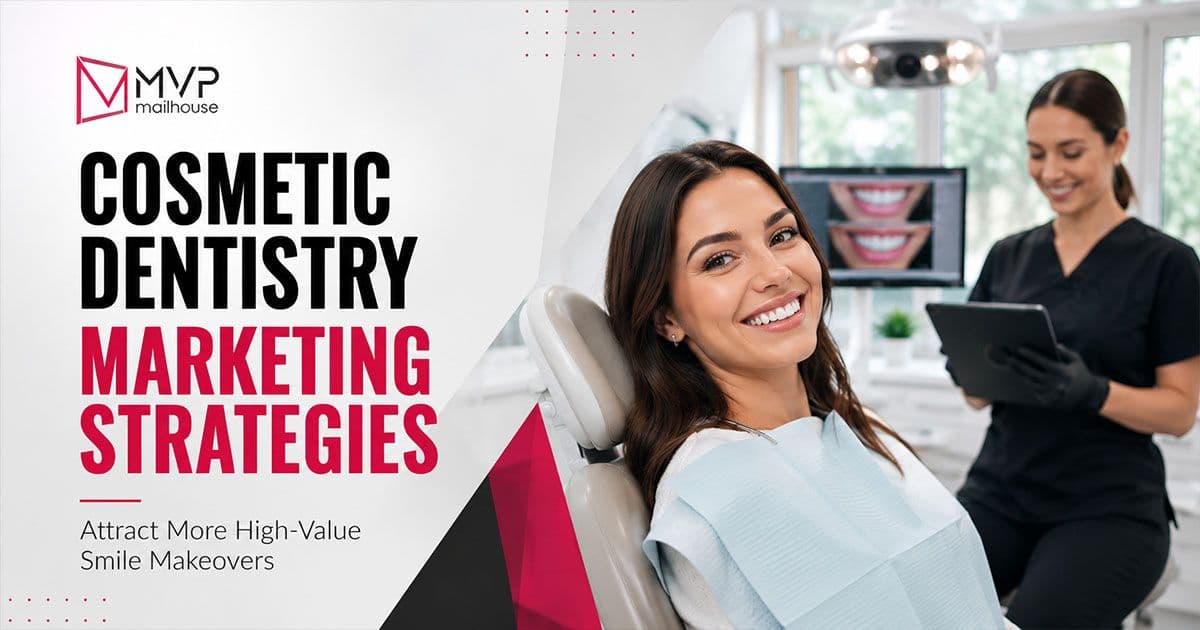
Cosmetic dentistry marketing strategies aren’t just about getting more patients through the door, they’re about attracting the right patients, at the right moment, with the right expectations.
Over 60% of adults say they want to improve their smile, yet only a fraction actively pursue cosmetic treatment. The gap isn’t demand. It’s marketing.
That’s where most practices struggle. We’ve seen incredible clinicians with world-class cosmetic results rely on generic dental marketing tactics and wonder why veneers, Invisalign, and whitening aren’t booking consistently. Cosmetic dentistry lives at the intersection of emotion, trust, and discretionary spending. If your marketing doesn’t reflect that reality, it underperforms.
Market Growth: The global cosmetic dentistry market was valued at $38.85 billion in 2024 and is projected to reach $71.99 billion by 2029, growing at a 13.0% CAGR, highlighting rapidly rising demand for aesthetic dental procedures.
This guide breaks down cosmetic dentistry marketing strategies that are actually working right now, based on firsthand experience, campaign data, and patterns we’ve repeatedly seen across high-performing practices. The goal is simple: help you generate more cosmetic consultations, improve case acceptance, and build a brand patients are proud to choose.
Before diving in, it’s worth grounding yourself in the fundamentals of what dental marketing actually is because cosmetic marketing builds on those foundations, it doesn’t replace them.
Build a Cosmetic-First Brand, Not a General Dental One
One of the biggest mistakes we see is that practices marketing cosmetic dentistry as a service, not a specialty. Patients don’t search for “a dentist who also does veneers.” They look for confidence, artistry, and proof.
High-performing cosmetic practices clearly position themselves visually and verbally:
- Website imagery focuses on smiles, faces, and lifestyle, not operatories.
- Copy emphasizes transformation, confidence, and outcomes.
- Navigation prioritizes cosmetic services, not hides them in a dropdown.
We’ve seen practices increase cosmetic consultation requests by 30–50% within 90 days simply by restructuring their homepage hierarchy and hero messaging to lead with cosmetic outcomes.
KPI to watch:
- Cosmetic service page conversion rate
- Time on page for smile makeover or veneer content
- Cosmetic consultation form submissions
Brand clarity doesn’t just help SEO, it pre-sells the case before the patient ever walks in.
Use Search Intent, Not Keywords, to Attract Cosmetic Patients
Ranking for “veneers near me” is table stakes. What actually moves the needle is aligning content with intent stages.
Cosmetic patients typically move through three phases:
- Inspiration – “Can veneers fix crooked teeth?”
- Evaluation – “Veneers vs Invisalign cost and results”
- Decision – “Best cosmetic dentist near me”
We’ve seen content that targets evaluation-stage queries outperform basic service pages by 2–3x in consultation bookings. Why? Because patients feel understood, not sold to.
This is where many practices benefit from expanding beyond generic tactics and leaning into frameworks proven in top dental marketing strategies that actually work but tailoring them specifically for high-ticket, elective care.
Timeline expectation:
- 60–90 days for ranking movement
- 90–120 days for measurable consultation lift
SEO for cosmetic dentistry isn’t fast, but it compounds hard when done correctly.
Social Proof Is the Currency of Cosmetic Dentistry
If there’s one non-negotiable in cosmetic dentistry marketing strategies, it’s proof. Patients don’t trust claims, they trust results.
The most effective practices consistently showcase:
- Before-and-after galleries with consistent lighting
- Short patient video testimonials focused on confidence, not procedures
- Social media posts that show real people, real reactions
We’ve seen practices double their veneer case acceptance rate simply by integrating a structured before-and-after review flow into their consult process.
A smart starting point is borrowing from proven dental marketing ideas for your practice and adapting them specifically for cosmetic storytelling, not promotions.
KPI to watch:
- Case acceptance rate for cosmetic treatment
- Consultation-to-treatment conversion
- Engagement rate on before-and-after content
If patients can’t see the result, they won’t commit to the investment.
Don’t Ignore Direct Mail for Cosmetic Case Reactivation
Digital gets the spotlight, but we’ve repeatedly seen direct mail outperform email and SMS when it comes to reactivating cosmetic opportunities from existing patients.
Why? Because cosmetic dentistry is emotional and physical mail feels intentional.
We’ve seen campaigns using personalized smile upgrade postcards generate:
- 15–25% response rates to cosmetic consult offers
- Noticeable increases in whitening, veneer, and Invisalign starts within 30–60 days
HIPAA-compliant solutions like My Patient Mail allow practices to target patients who’ve already expressed interest but never moved forward, often the lowest-hanging fruit for cosmetic growth.
Direct mail isn’t old-school. It’s underused and that’s exactly why it works.
Paid Media Works for Cosmetic Dentistry, If You Respect the Psychology
Paid ads fail in cosmetic dentistry when they’re treated like emergency dentistry. We’ve seen this mistake repeatedly: generic Google Ads pointing to generic service pages with “Book Now” CTAs. That approach burns budget fast.
Cosmetic dentistry marketing strategies require a longer persuasion window. Patients aren’t in pain; they’re evaluating risk, cost, and trust. High-performing campaigns do three things differently:
- They lead with outcomes, not offers: Ads that reference confidence, weddings, career moments, or “finally liking your smile” consistently outperform discount-driven ads. We’ve seen cost-per-consult drop by 30–40% simply by reframing ad copy around life moments instead of procedures.
- They use education as the conversion bridge: Landing pages that answer common objections, longevity, cost justification, reversibility convert better than hard-sell pages. This aligns tightly with how people actually research cosmetic care.
- They measure consult quality, not just form fills: The real KPI isn’t cost per lead; it’s cost per accepted cosmetic case. When practices track that properly, they often discover that fewer, better leads outperform high-volume campaigns.
This execution model mirrors what we’ve outlined in how to market a dental practice in 2025 but cosmetic dentistry amplifies the need for patience and precision.
Timeline expectations:
- 2–4 weeks for creative testing
- 60 days to stabilize cost per consult
- 90 days to judge ROI meaningfully
Paid media isn’t instant gratification, but when aligned with cosmetic intent, it becomes scalable.
The Consultation Experience Is Part of Your Marketing
Here’s an uncomfortable truth we’ve seen play out: some practices have excellent marketing and weak consultations. That disconnect kills ROI.
In cosmetic dentistry, the consult is the conversion moment. Marketing doesn’t stop when the patient books.
High-performing practices engineer the consult intentionally:
- Visual aids are ready before the patient arrives
- Before-and-after cases are curated, not random
- Financing is framed early, not as a last-minute save
We’ve watched practices increase cosmetic case acceptance by 20–35% without changing a single ad, just by restructuring the consultation flow.
This is where insights from what is the most effective type of marketing for dentists matter. The answer often isn’t “more traffic.” It’s better conversion of the traffic you already have.
KPIs that actually matter here:
- Consult-to-treatment acceptance rate
- Average cosmetic case value
- Time from consult to decision
If your marketing is working but production isn’t rising, the bottleneck is almost always the consult experience.
Content That Pre-Sells High-Ticket Cosmetic Care
Cosmetic patients don’t want hype. They want clarity. The most effective cosmetic dentistry marketing strategies use content to remove fear before the consult.
We’ve seen long-form content that transparently explains:
- Why cosmetic dentistry costs what it does
- Who is not a good candidate for veneers
- What happens if expectations aren’t realistic
Ironically, this honesty increases conversions. Patients who self-select into consults are more committed and less price-sensitive.
Educational content also strengthens authority signals, reinforcing the broader impact explained in how smart marketing helps dentists get more patients especially for elective, trust-based treatments.
SEO + content KPIs:
- Assisted conversions from blog content
- Scroll depth on cosmetic articles
- Branded search growth over time
This is slow-burn marketing, but it compounds into predictable cosmetic demand.
Direct Mail as a Conversion Accelerator, Not a Lead Generator
Direct mail deserves a second mention but with a different purpose. In cosmetic dentistry, we’ve consistently seen direct mail work best after awareness exists.
Think of it as a nudge, not an introduction.
Effective use cases we’ve seen:
- Following up with patients who had cosmetic consults but delayed
- Re-engaging whitening patients for veneers or aligners
- Reframing treatment plans patients previously declined
When timed correctly, direct mail shortens decision cycles dramatically. Campaigns sent 30–90 days after an initial consult often trigger action because the patient already trusts the practice, they just needed a reminder.
This is where cosmetic dentistry marketing strategies become multi-channel by design, not accident.
What Actually Makes Cosmetic Dentistry Marketing Work Long-Term
After working across dozens of cosmetic-focused practices, one pattern shows up again and again: the practices that win don’t chase tactics, they build systems. Cosmetic dentistry marketing strategies only become reliable when branding, traffic, conversion, and follow-up all work together.
Here’s what we’ve consistently seen drive sustainable results:
- Clear cosmetic positioning attracts higher-intent patients and filters out price shoppers.
- Intent-driven SEO and content build trust before the first conversation ever happens.
- Paid media accelerates demand when aligned with patient psychology, not urgency.
- Consultation experience design determines whether marketing dollars turn into revenue.
- Direct mail and patient reactivation unlock overlooked growth from patients who already trust you.
When even one of these elements is missing, growth stalls. When they’re aligned, cosmetic cases become predictable instead of sporadic.
Realistic Expectations, Benchmarks, and Timelines
Cosmetic dentistry is not a volume game, it’s a value game. Practices that succeed set expectations accordingly.
Based on what we’ve seen across markets:
- 90 days: Clear lift in cosmetic consultations and higher-quality leads
- 3–6 months: Noticeable improvement in case acceptance and average case value
- 6–12 months: Predictable monthly cosmetic production with compounding brand demand
KPIs worth tracking consistently:
- Cosmetic consult bookings per month
- Consult-to-treatment acceptance rate
- Average cosmetic case value
- Reactivated patient revenue from follow-up campaigns
If your marketing reports don’t connect directly to these outcomes, they’re not telling you what you actually need to know.
The Biggest Mistake Practices Make With Cosmetic Marketing
The most common failure we see isn’t lack of effort, it’s fragmentation. Practices run ads without fixing consults. They invest in SEO without clear cosmetic positioning. They collect leads but never follow up strategically.
Cosmetic dentistry marketing strategies work best when they’re intentional, integrated, and patient-centric. Patients don’t experience your marketing in channels, they experience it as a journey. Every touchpoint either builds confidence or introduces doubt.
Final Thoughts: Confidence Is the Real Product
At the end of the day, cosmetic dentistry isn’t about veneers, aligners, or whitening. It’s about confidence. The practices that grow consistently are the ones that market that transformation, not just the procedure.
If you’re serious about building a cosmetic pipeline that doesn’t rely on discounts or luck, the next step isn’t more tactics. It’s smarter execution.
Visit our website to see how we help dental practices turn marketing into measurable production, or schedule a demo to explore how our patient re-engagement and direct mail solutions can support your cosmetic growth goals.
Tags
Direct Mail Strategies
Tips and Tutorials
Frequently Asked Questions
Related blog



Ready For Your Success Story?
Get 500 Free Handout cards shipped right to your doorstep!