How Much Do Mailing Lists Cost in Direct Mail?
How much do mailing lists cost in direct mail? Real prices, 1%+ response stats, and ROI insights to cut waste. Visit our site or book a demo.

Emily Duke
marketing manager
·11 min read
·Apr 25, 2025


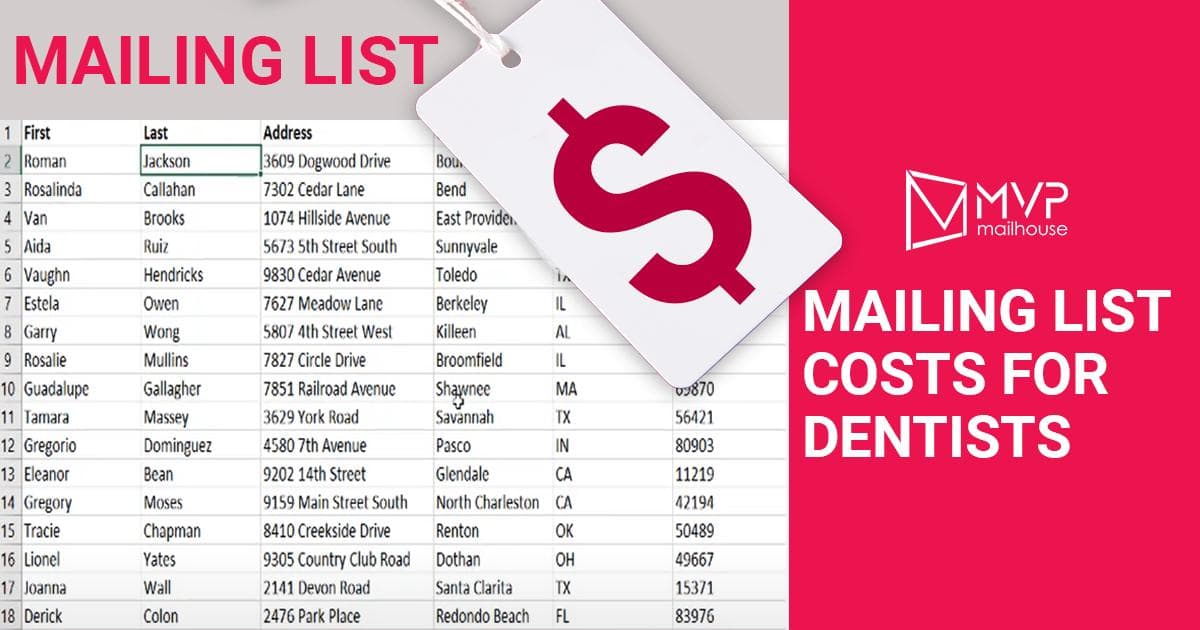
If you’ve ever asked yourself how much do mailing lists cost before launching a direct mail campaign, you’re already asking the right question. Mailing lists are often the quiet cost driver behind direct mail performance, yet they’re one of the least understood parts of the budget.
Here’s a stat that surprises a lot of business owners: up to 40% of direct mail ROI is influenced by list quality alone, not design, not printing, not even postage. We’ve seen beautifully designed mail pieces fail simply because the list was wrong and average-looking postcards win because the list was dialed in.
Fact: According to industry benchmarks, direct mail campaigns using quality mailing lists can achieve an average response rate of up to 4.4%, significantly higher than email’s typical 0.12% response rate.
This article breaks down what mailing lists actually cost in direct mail marketing, why those costs vary so much, and how to evaluate whether you’re spending smart or bleeding budget. If you’re running or considering direct mail marketing, especially in competitive verticals like dental marketing, this will save you money and frustration.
What You’re Actually Paying for When You Buy a Direct Mailing List
A mailing list isn’t just a spreadsheet of names and addresses. In direct mail, what you’re paying for is access to targeting precision, data accuracy, and deliverability.
At the most basic level, a direct mailing list includes:
- A physical mailing address
- Basic geographic data
- Delivery verification (CASS, NCOA, suppression checks)
But that’s just the floor.
As soon as you layer in demographics, household data, income ranges, homeownership status, business attributes, or industry-specific filters, cost starts to move. Fast.
If you want a foundational breakdown of what a mailing list is and why it matters in campaign performance, this guide on what is a mailing list in direct mail and why it matters is a good baseline reference.
Average Cost of Mailing Lists in Direct Mail (Real-World Ranges)
So let’s answer the core question directly.
Most direct mail lists cost between $0.03 and $0.30 per record.
That’s a wide range and intentionally so. Here’s how it typically breaks down based on what we’ve seen across hundreds of campaigns:
- Broad consumer lists (ZIP-level or carrier route): ~$0.03–$0.06 per address
- Standard targeted lists (age, income, homeowner filters): ~$0.08–$0.15 per address
- Highly targeted or niche lists (industry-specific, healthcare, B2B, dental): ~$0.18–$0.30+ per address
For example, a dental practice mailing to “every household within five miles” will pay far less per record than a practice targeting “homeowners aged 30–65, household income $75k+, no recent dental visit.”
We’ve seen this play out repeatedly in dental marketing campaigns. Practices that cheap out on lists often end up paying more later in wasted postage, poor response rates, and slower patient acquisition.
Why Mailing List Costs Vary So Much
Two lists with the same number of records can differ in cost by 5–10x. That’s not arbitrary. It comes down to four core variables.
1. Targeting Depth and Data Layers
The more specific the targeting, the higher the cost per record.
Adding filters like:
- Homeownership
- Length of residence
- Household income
- Presence of children
- Industry or profession (for B2B)
increases list value because it increases relevance. And relevance drives response.
We’ve seen response rates jump from 0.4% to over 1% simply by tightening list criteria without changing the mail piece at all.
If you want to understand how smart targeting works in practice, this breakdown of direct mail targeting shows how segmentation directly impacts cost and ROI.
2. Data Source and Freshness
Not all data is created equal.
Lists sourced from:
- USPS-verified databases
- Regularly refreshed consumer panels
- Industry-specific data aggregators
cost more because they work more reliably.
Cheaper lists often rely on stale data. We’ve seen campaigns where 10–15% of mail was undeliverable simply because the list wasn’t properly updated. That’s money straight into the shredder.
Freshness matters more than people think especially if you’re mailing higher-cost formats like oversized postcards or letters.
3. Usage Rights (One-Time vs. Unlimited Use)
This is a detail many marketers miss.
Most mailing lists are licensed for one-time use only. If you want to mail the same list again:
- You pay again
- Or you pay a premium upfront for reuse rights
From a performance standpoint, this matters. Direct mail rarely converts best on the first touch. We typically see:
- Touch 1: awareness
- Touch 2: recognition
- Touch 3: strongest response
That’s why understanding how to create a mailing list for direct mail and when owning your list makes sense can materially change long-term costs.
4. Industry-Specific Demand
Some industries simply cost more to target.
Dental, legal, home services, and financial services lists are in high demand because they convert well. That demand drives up pricing.
In dental specifically, we’ve seen practices hesitate at a $0.22-per-record list then happily spend thousands on Google Ads that convert at a fraction of the rate.
Which leads to the real question most people are asking.
Is Direct Mail Worth It If Mailing Lists Cost This Much?
Short answer: yes, if the list is right.
Longer answer: mailing lists should be evaluated as a performance lever, not a line-item expense.
A $0.25 list that generates a 1.2% response rate is far cheaper than a $0.05 list that generates 0.2%. We’ve watched campaigns cut cost per lead in half by spending more on the list and less on volume.
If you’re weighing list cost against overall campaign economics, it helps to understand the full picture including printing and postage. This guide on how much direct mail costs puts mailing list expenses into proper context.
How Mailing List Costs Impact ROI in Direct Mail Marketing
How Mailing List Costs Impact ROI in Direct Mail Marketing
Mailing list cost doesn’t live in isolation. It directly affects response rate, cost per lead, and speed to results, the three KPIs that actually matter in direct mail marketing.
We’ve seen this mistake over and over: businesses optimize for the cheapest list instead of the most profitable list. The result is predictable. Low engagement. Slow traction. And the inevitable question: “Is direct mail worth it?”
The honest answer depends less on format and far more on the list behind it.
Cheap Lists vs. Targeted Lists: What the Data Actually Shows
Let’s talk real numbers.
Across campaigns we’ve run and audited, here’s what we consistently see:
- Low-cost, broad lists ($0.03–$0.06 per record)
Typical response rates: 0.2%–0.4% - Mid-tier targeted lists ($0.08–$0.15 per record)
Typical response rates: 0.6%–0.9% - Highly targeted lists ($0.18–$0.30+ per record)
Typical response rates: 1.0%–1.5%+
That difference compounds quickly.
Mailing 10,000 pieces on a cheap list might generate 25 leads. Mailing 5,000 pieces on a premium list might generate the same or more while cutting print and postage in half.
We’ve seen this happen repeatedly in service-based businesses, especially healthcare and dental. Precision beats volume almost every time.
Dental Marketing Example: Why List Quality Changes Everything
Dental practices are a perfect case study because margins and lifetime value are clear.
A new dental patient is often worth $1,500–$3,000+ over time, yet many practices still hesitate to spend an extra $0.10 per record on a better list.
We’ve watched two nearly identical campaigns produce wildly different outcomes:
- Practice A mailed 15,000 households using a generic radius-based list
Result: low call volume, high no-show rate - Practice B mailed 7,500 households using income, homeownership, and family filters
Result: fewer pieces mailed, double the booked appointments
The difference wasn’t the postcard. It was the list.
If you want to go deeper on this, the benefits of targeted mailing lists for dental marketing break down why segmentation consistently outperforms saturation in this industry.
How Mailing Lists Affect Cost Per Lead (Not Just Total Spend)
How Mailing Lists Affect Cost Per Lead (Not Just Total Spend)
Most marketers look at mailing list cost as a fixed expense. That’s the wrong lens.
What actually matters is cost per response and cost per acquisition.
Here’s a simplified framework we use when evaluating lists:
- List cost per piece
- print + postage cost per piece
- ÷ expected response rate
A more expensive list almost always lowers cost per lead when it improves relevance.
We’ve seen campaigns where:
- List cost increased by 60%
- Total campaign cost increased by only 12%
- Cost per lead dropped by over 40%
That’s not theoretical. That’s math plus experience.
Mailing Frequency, List Reuse, and Long-Term Economics
Another overlooked factor: mailing cadence.
Direct mail rarely performs best as a one-and-done effort. In most industries, we see meaningful lift after:
- 2–3 touches over 60–90 days
- Consistent messaging to the same audience
This is where list licensing and reuse rights matter. Paying slightly more upfront for a reusable list can dramatically reduce costs over time.
We’ve seen businesses struggle because they bought cheap one-time-use lists, then had to repurchase data for every follow-up erasing any initial savings.
Owning or reusing a high-quality list almost always wins over time.
How List Cost Interacts With Postcard and Mail Format Costs
Mailing list costs don’t exist in a vacuum, they interact with format decisions.
If you’re sending:
- Oversized postcards
- Thicker stock
- Variable data pieces
the cost of wasted mail increases.
We’ve seen campaigns where upgrading the list allowed clients to confidently use higher-impact formats because fewer pieces were wasted on the wrong households.
If you’re evaluating total economics, it helps to understand format-level costs too. This guide on how much it costs to mail a postcard shows how list quality influences the true cost of every mailed piece.
What Smart Businesses Budget for Mailing Lists
Based on real campaigns, here’s what we typically recommend as a starting point:
- Local service businesses: 10–20% of total direct mail budget allocated to list quality
- Dental practices: 15–25% allocated to targeting and data accuracy
- Competitive markets: Closer to 20–30%, especially when lifetime value is high
Businesses that underfund lists almost always overpay somewhere else—usually in postage and lost opportunity.
Build vs. Buy: When Mailing List Costs Make Sense Either Way
By now, the real takeaway should be clear: mailing list cost isn’t the problem—misalignment is.
Still, one of the most common questions we hear is whether businesses should build their own list or buy one for direct mail.
Here’s the honest answer based on what we’ve seen work.
Buying a Mailing List Makes Sense When:
- You need speed and scale
- You’re entering a new market or service area
- You want immediate reach beyond your existing audience
Purchased lists are ideal for lead generation and market expansion. Most successful direct mail campaigns start here because you can launch in days, not months.
Building a Mailing List Makes Sense When:
- You already have customer data
- You’re running repeat campaigns
- You want compounding ROI over time
Owned lists shine in retention, upsells, and reactivation. Over time, they reduce dependency on rented data and lower long-term acquisition costs.
We’ve seen the strongest performers do both: buy smart lists upfront, then convert responders into owned audiences that can be mailed repeatedly at a fraction of the cost.
Timelines and Realistic Expectations for Results
Another misconception that hurts ROI: expecting instant results.
Direct mail is not a one-touch channel. In most industries, here’s what realistic timelines look like:
- 0–30 days: Awareness and first responses
- 30–60 days: Recognition, trust, response lift
- 60–90 days: Peak conversion and ROI clarity
Campaigns that stop after one drop rarely perform at their potential. We’ve seen response rates double simply by committing to a 90-day cadence using the same targeted list.
This is also where mailing list quality proves its value. Better lists shorten the ramp-up period and stabilize results faster.
Is Direct Mail Worth It When You Factor in Mailing List Costs?
Let’s close the loop on the question everyone asks eventually: is direct mail worth it?
From what we’ve seen, yes, absolutely when mailing list decisions are made strategically.
Direct mail consistently outperforms digital channels when:
- Customer lifetime value is high
- Geographic targeting matters
- Trust and local presence influence buying decisions
Dental practices, home services, and professional services fall squarely into this category. When list quality is prioritized, direct mail becomes predictable, scalable, and measurable, not a gamble.
The businesses that struggle aren’t overspending on lists. They’re underspending on relevance.
Final Thoughts: What Mailing Lists Really Cost You
So, how much do mailing lists cost in direct mail?
On paper: a few cents per record.
In reality: they cost you either wasted spend or unlock profitable growth.
We’ve seen this play out too many times to count. Campaigns don’t fail because mailing lists are expensive. They fail because the wrong lists are cheap.
When you treat mailing lists as a performance lever, not a commodity, you stop asking “How cheap can this be?” and start asking “How well can this perform?”
That shift changes everything.
Ready to Run Smarter Direct Mail?
If you’re planning a direct mail campaign or trying to fix one that’s underperforming, we can help you choose the right mailing list, budget correctly, and set realistic expectations before a single piece goes out.
Visit our website or schedule a demo to see how smarter list strategy turns direct mail into a reliable growth channel instead of a guessing game.
Tags
Industry Insights
Frequently Asked Questions
Related blog



Ready For Your Success Story?
Get 500 Free Handout cards shipped right to your doorstep!