Direct Mail: Postcard or Letter? Which Converts Best for ROI
Postcard or Letter? Boost ROI by 2x with the right strategy. Learn when each converts best. Start optimizing your direct mail campaigns today.

Michael Stephen Hohl
marketing consultant
·12 min read
·Mar 19, 2026


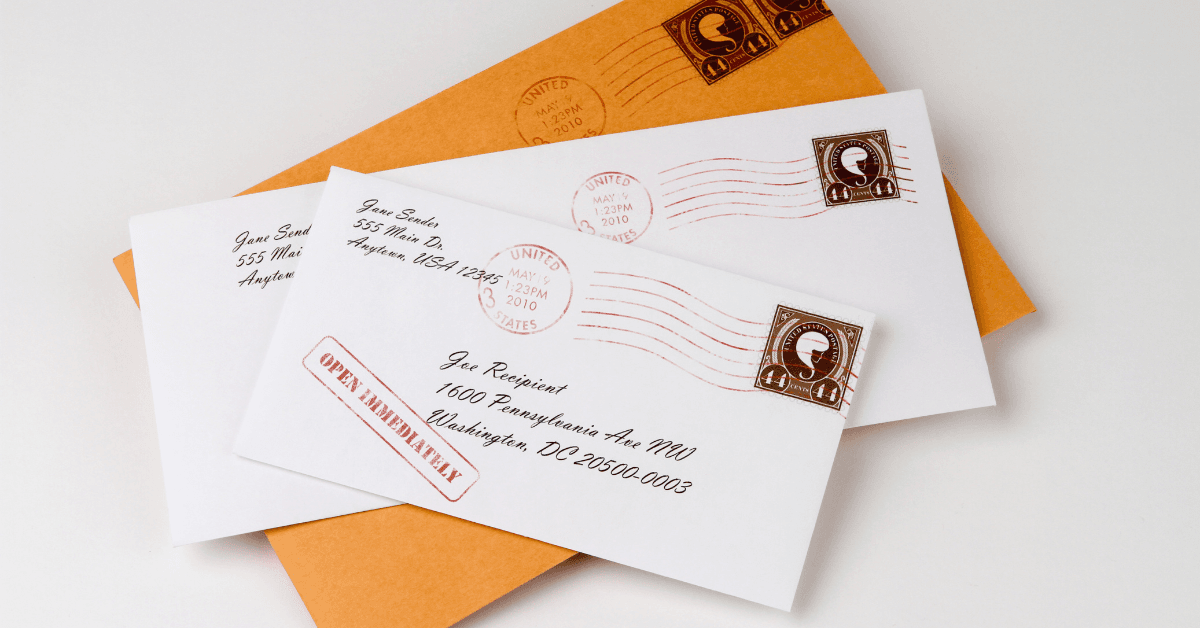
Is a postcard or letter more effective for direct mail? It’s a question that comes up in nearly every campaign strategy meeting and for good reason. Direct mail still delivers a median ROI of 29%, outperforming many digital channels when executed correctly. But the format you choose can quietly make or break your results.
We’ve seen this firsthand: two campaigns targeting the same audience, with similar offers, one using postcards, the other letters produced wildly different outcomes. One generated quick calls but low ticket conversions. The other delivered fewer leads, but nearly doubled revenue per client.
This article breaks down the direct mail postcard vs letter debate with real-world context, data, and experience. By the end, you’ll know not just which format performs better but when, why, and how to use each for maximum ROI, especially in industries like dental marketing where precision matters.
Postcard vs Letter: What’s the Real Difference?
At a glance, the difference between a postcard and a letter seems obvious. But in terms of performance, the distinction goes deeper into psychology, cost structure, and buyer intent.
A postcard is immediate. No envelope. No barrier. The message is visible instantly.
A letter, on the other hand, introduces friction but also curiosity, privacy, and perceived value.
According to USPS data:
- Postcards average a 4.25% response rate
- Letters average slightly higher at 4.5%, but often with higher conversion value
That small percentage gap doesn’t tell the full story. What matters is how people engage.
According to the Association of National Advertisers (ANA), postcards can generate response rates of up to 5.7%, while letter-sized mail averages around 4.3%, showing that format choice directly impacts campaign performance and ROI.
Postcards: Fast, Visual, and High-Frequency
Postcards work because they’re impossible to ignore. There’s no decision to open your message.
We’ve seen postcards excel in:
- High-frequency campaigns (weekly/monthly touches)
- Local promotions (e.g., dental checkups, seasonal offers)
- Brand awareness and recall
In dental marketing specifically, postcards are often used for:
- New patient specials
- Teeth whitening promotions
- Insurance reminders
If you want a deeper look at how postcards fit into broader campaigns, check out this breakdown of types of direct mail.
Typical results we’ve seen:
- Faster response cycles (calls within 3–7 days)
- Lower cost per piece
- Lower average revenue per conversion
This makes postcards ideal for volume-based strategies.
Letters: Personal, Detailed, and Higher Intent
Letters introduce a step: opening the envelope. That small action filters your audience.
What you lose in immediacy, you gain in:
- Attention span
- Message depth
- Perceived credibility
In our experience, letters consistently outperform postcards when:
- The offer is complex or high-value
- Trust needs to be built (e.g., dental implants, cosmetic procedures)
- The audience requires education before converting
We’ve seen dental practices use letters to:
- Explain treatment plans
- Introduce new services
- Build authority through storytelling
Typical results we’ve seen:
- Slower response timelines (7–21 days)
- Lower response volume
- Higher case acceptance rates and lifetime value
This is where letters shine, they don’t just generate leads, they generate better leads.
The Psychology Behind Response Rates
If you’re comparing letter vs postcard response rate, you need to look beyond percentages and into behavior.
- A postcard says: “Here’s an offer. Act now.”
- A letter says: “Here’s something worth your time.”
That difference changes everything.
According to the Data & Marketing Association:
- Consumers spend 43% more time engaging with letter mail vs postcards
- Personalized letters can increase response rates by up to 135%
We’ve seen this play out repeatedly.
One dental campaign we ran used:
- A postcard offering a $99 cleaning
- A letter explaining long-term oral health benefits with the same offer
The postcard drove more calls. But the letter? It produced patients who accepted additional treatments, raising ROI by nearly 2.3x.
This is the trade-off:
- Postcards = speed and volume
- Letters = depth and conversion quality
Understanding this is key before deciding when to use postcards vs letters.
Cost Comparison: Postcard vs Letter
Let’s talk numbers because ROI starts with cost.
On average:
Postcards cost: $0.30–$0.60 per piece (printing + postage)
Letters cost: $0.70–$1.50+ per piece
That’s a significant gap, especially at scale.
But here’s where many campaigns go wrong: they optimize for cost per piece, not cost per acquisition.
We’ve seen businesses choose postcards purely because they’re cheaper, only to end up paying more per customer due to lower conversion quality.
To properly evaluate this, you need to understand how ROI is calculated. If you haven’t already, this guide on how to calculate ROI from your direct mail campaign breaks it down clearly.
What the Data Doesn’t Tell You
A postcard might cost half as much but if a letter brings in:
- Higher-value cases
- More repeat customers
- Better retention
Then the letter often wins on ROI.
We’ve seen this especially in dental marketing, where:
- A $1,500 treatment case offsets higher mail costs instantly
- Patient lifetime value can exceed $5,000+
In those cases, spending more upfront on a letter isn’t just justified, it’s strategic.
When to Use Postcards vs Letters (With Real Campaign Scenarios)
Choosing between a postcard or letter isn’t about preference, it’s about alignment. The format should match your goal, your audience’s awareness level, and the value of your offer.
We’ve seen campaigns fail not because the offer was weak, but because the format didn’t fit the moment. When that happens, even a strong message underperforms.
Let’s break this down in practical terms.
Use Postcards When Speed and Visibility Matter
Postcards are built for immediacy. If your goal is to generate quick awareness or drive short-term action, they’re hard to beat.
Data from the USPS shows that 98% of people check their mail daily, and postcards are often the first thing seen. That visibility advantage translates into faster engagement.
We’ve seen postcards outperform letters in:
- New mover campaigns (first impression matters)
- Seasonal promotions (e.g., “Back-to-school dental cleaning”)
- Local saturation campaigns (high-frequency exposure)
In postcard vs letter for local marketing, postcards consistently win when:
- The offer is simple
- The decision is low-risk
- The audience doesn’t need much education
Example (Dental Marketing):
A dental clinic promoting a $79 cleaning special used postcards across a 5-mile radius. Within 2 weeks:
- Response rate: ~4.8%
- Calls peaked within the first 5 days
- Majority of bookings were first-time patients
But here’s the catch, we’ve seen many of those patients only come in once. Great for volume. Not always great for long-term ROI.
If you’re trying to improve that performance, this guide on how to increase direct mail response rates dives into tactics that actually move the needle.
Use Letters When Trust and Value Need to Be Built
Letters are a different game. They slow the process down but in a good way. When someone opens a letter, they’ve already made a micro-commitment. That alone increases attention and intent.
According to marketing studies:
- Long-form direct mail (like letters) can increase conversion rates by 20–30% for high-ticket services
- Personalized messaging can boost engagement by over 100%
We’ve seen letters dominate in scenarios like:
- High-value treatments (implants, Invisalign, cosmetic dentistry)
- Reactivation campaigns (bringing back inactive patients)
- Educational offers (explaining procedures or long-term benefits)
Example (Dental Marketing):
A practice promoting dental implants switched from postcards to letters. The result:
- Response rate dropped slightly (from ~4% to ~3.2%)
- But case acceptance increased by 40%
- Overall ROI improved by 2x due to higher treatment value
This is where many marketers get it wrong, they chase response rate instead of revenue per response.
If you’re unsure what benchmarks to aim for, this breakdown of what is a good response rate for direct mail marketing will give you a clearer baseline.
The Awareness Framework: A Better Way to Decide
Instead of asking “Which is better: postcard or letter?”, ask:
How aware is my audience?
We’ve found this framework far more reliable than any blanket rule.
- Cold audience (low awareness) → Postcard
- They don’t know you
- They won’t read much
- You need to grab attention fast
- Warm audience (moderate awareness) → Either, depending on offer
- They recognize your brand
- They may engage with more detail
- Hot audience (high awareness or past patients) → Letter
- They trust you
- They’re more likely to read and convert on detailed messaging
This is especially important in direct mail for dentists, where patient trust directly impacts treatment acceptance.
Postcard vs Letter: Pros and Cons That Actually Matter
Let’s strip away the theory and look at what really impacts ROI.
Postcards
Pros:
- Lower cost (up to 50% cheaper per piece)
- Instant visibility (no envelope barrier)
- Faster response cycles (often within 1 week)
- Ideal for high-frequency campaigns
Cons:
- Limited space for messaging
- Lower perceived value
- Less effective for complex offers
- Shorter engagement time
We’ve seen postcards work best when you treat them like billboards: clear, bold, and impossible to miss.
If you’re designing one, the difference between average and high-performing campaigns often comes down to layout. This breakdown of how design impacts direct mail response rates is worth reviewing.
Letters
Pros:
- More space for persuasion and storytelling
- Higher perceived credibility
- Better for high-ticket conversions
- Stronger personalization opportunities
Cons:
- Higher cost per piece
- Slower response times
- Requires stronger copywriting
We’ve seen letters fail when they’re written like brochures, too generic, too safe. The best-performing letters feel personal, almost like a one-to-one conversation.
What This Means for ROI (Not Just Response Rate)
Here’s where everything comes together.
A campaign’s success isn’t defined by how many people respond, it’s defined by what those responses are worth.
We’ve seen:
- Postcards generate more leads at a lower cost
- Letters generate fewer leads, but significantly higher revenue per lead
So the real question becomes:
Do you want more calls or better customers?
In dental marketing, that distinction is critical. A steady flow of low-value cleanings won’t grow your practice the same way high-ticket procedures will.
If you’re running campaigns for dental practices, this guide on how to measure direct mail success for dental practices explains how to track what actually matters beyond surface-level metrics.
Which Converts Best for ROI? The Real Answer
If you’re looking for a definitive winner in the postcard or letter debate, here it is:
Neither consistently wins on its own. The highest ROI campaigns use both, strategically.
That might sound like a cop-out, but it’s what we’ve seen across hundreds of campaigns. The format isn’t the deciding factor. The sequence is.
The Hybrid Strategy That Outperforms Everything Else
The most profitable campaigns we’ve seen follow a simple pattern:
- Postcard first (awareness + speed)
- Letter second (depth + conversion)
- Optional follow-up postcard (reminder + urgency)
This approach aligns with how people actually make decisions.
- The postcard introduces the offer quickly
- The letter builds trust and explains value
- The follow-up reinforces urgency and captures late responders
According to multi-touch marketing data:
- Campaigns with 2–3 touchpoints can increase response rates by up to 60%
- Follow-ups alone can account for 30–50% of total conversions
We’ve seen this play out clearly in dental campaigns.
Example (Dental Marketing):
- Week 1: Postcard promoting a new patient special
- Week 3: Letter explaining long-term oral health benefits and services
- Week 5: Reminder postcard with limited-time urgency
Results:
- Combined response rate: ~6.2%
- Cost per acquisition dropped by ~18%
- Patient lifetime value increased significantly due to better case acceptance
This is where most campaigns fall short, they rely on a single touchpoint and expect outsized results.
Timeline, KPIs, and What to Expect
Let’s set realistic expectations, because ROI doesn’t happen overnight.
Typical Campaign Timeline
- Week 1–2: Initial responses (mostly from postcards)
- Week 3–5: Stronger conversions (driven by letters)
- Week 6–8: Follow-up responses and lagging conversions
We’ve seen campaigns plateau early when there’s no second touch. On the flip side, campaigns that stay consistent over 6–8 weeks tend to stabilize and scale.
Key KPIs to Track
If you’re serious about ROI, track beyond surface-level metrics.
Focus on:
- Response rate (target: 3–5% for most campaigns)
- Conversion rate (appointments booked or sales closed)
- Average revenue per customer
- Customer lifetime value (LTV)
- Cost per acquisition (CPA)
In dental marketing, strong campaigns often look like:
- 4–6% response rate
- 60–75% appointment show rate
- $300–$1,500+ average case value (depending on service)
If you’re using postcards specifically, this guide on what dental postcards in dental marketing breaks down how to maximize their effectiveness in patient acquisition.
Design and Execution Still Matter More Than Format
One thing we’ve learned the hard way:
A poorly designed postcard will lose to a well-written letter and vice versa.
Format gets attention. Execution drives results.
We’ve seen small design tweaks increase response rates by 20–40%, especially when:
- The offer is clear and above the fold
- The CTA is specific and urgent
- The design reduces friction (not cluttered, easy to scan)
If you want inspiration, you can explore proven layouts and offers in this direct mail design gallery, where high-performing templates are built specifically to convert.
Final Verdict: Postcard or Letter?
Let’s bring it all together.
- Postcards are best for:
- Speed, visibility, and volume
- Local marketing and simple offers
- Generating immediate responses
- Letters are best for:
- Trust, education, and high-value services
- Building deeper engagement
- Increasing revenue per customer
- The highest ROI comes from combining both in a structured campaign.
We’ve seen this happen repeatedly: businesses that stop thinking in terms of “postcard vs letter” and start thinking in terms of customer journey consistently outperform those that don’t.
Conclusion
So, postcard or letter, which converts best for ROI?
The real answer is this:
The format that aligns with your audience, your offer, and your timing will always win.
Postcards bring speed and scale. Letters bring depth and conversion quality. Together, they create a system that captures attention, builds trust, and drives measurable revenue.
If you take one thing away from this:
Don’t choose based on cost alone. Choose based on strategy.
And if you’re serious about improving your direct mail performance especially in competitive industries like dental marketing , you don’t have to figure it out alone.
Visit our website to explore more resources, proven strategies, and real campaign insights. Or schedule a demo with our team to see how we can help you build a direct mail system that actually delivers ROI.
Tags
Direct Mail Strategies
Frequently Asked Questions
Related blog




Ready For Your Success Story?
Get 500 Free Handout cards shipped right to your doorstep!