Redwood Dental Case Study
The Redwood Dental case study shows how 10,000 targeted mailers rebuilt a post-COVID practice, driving steady new patients and strong ROI. See the results.

Aaron Boone
ceo
·8 min read
·Dec 17, 2025


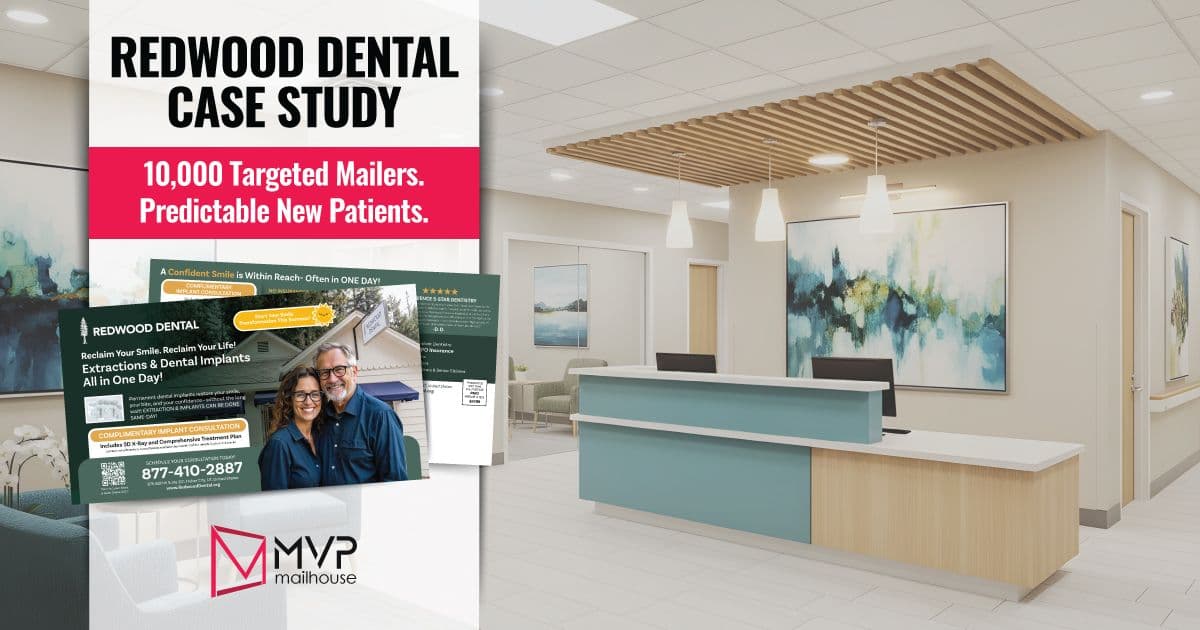
Direct mail marketing still works especially when a business has no brand equity, no database, and no margin for wasted spend. In fact, the Data & Marketing Association reports that direct mail delivers response rates up to 9x higher than email for house lists, a stat that matters a lot when you’re starting from zero.
This Redwood Dental case study breaks down how a post-COVID dental practice rebuilt demand from scratch using a disciplined, repeatable direct mail strategy. No gimmicks. No vanity metrics. Just patient growth, predictable ROI, and momentum where there was none.
We’ve seen this exact scenario before: a new owner inherits a location, not a business. That distinction changes everything.
The Starting Line: A Dental Practice with No History, No Data, No Safety Net
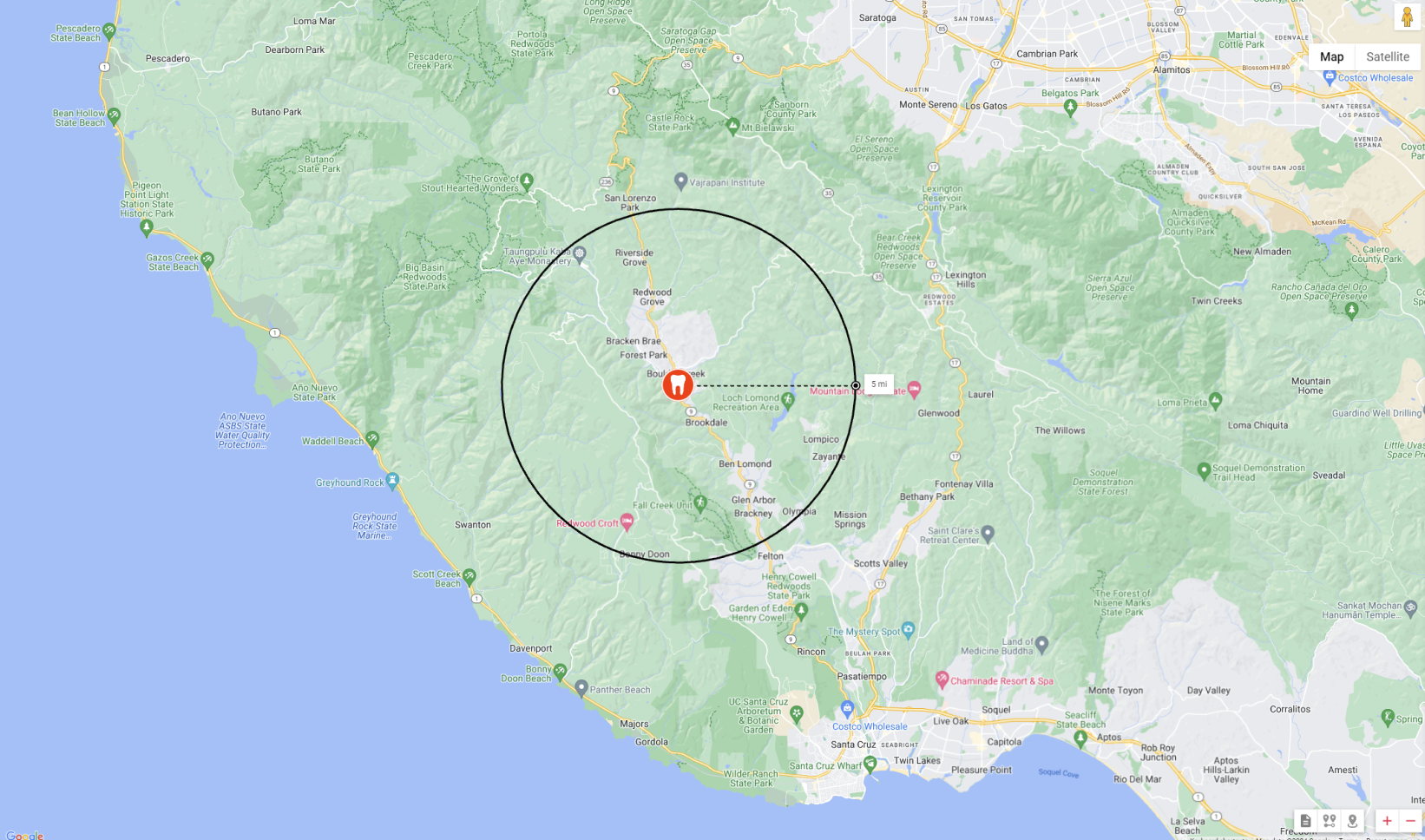
When Dr. Sulmaan Hassan acquired Redwood Dental in the mountains near Boulder, California, the practice wasn’t underperforming, it was effectively nonexistent.
The previous owner had shut down during COVID and never reopened. There were:
- No patient records
- No recall system
- No historical production data
- No active marketing channels
In practical terms, this meant Redwood Dental wasn’t rebuilding—it was launching, but without the benefit of a “grand opening” or pent-up brand awareness.
We’ve seen this happen post-COVID more than people realize. Practices change hands quietly, and the new owner assumes momentum will carry over. It rarely does.
Inbound demand at Redwood Dental consisted of a small trickle of calls from locals who remembered the old practice. That’s not growth, that’s noise. To become viable, the practice needed new-patient volume it could control, not hope for walk-ins.
Key constraint: geography.
The practice sits in a mountainous region with natural limits on drive-time and population density. Digital ads alone wouldn’t solve that. Broad targeting would waste spend outside realistic patient zones.
This is where channel choice starts to matter.
Why Direct Mail Marketing Was the Right Lever (and Why It Still Is)
At this stage, most practices default to paid search or social ads. We’ve tested that route dozens of times in similar markets, and here’s the hard truth:
- Digital works best when there’s already brand demand or reviews
- New practices pay a premium for every unqualified click
- Geo-fencing in rural or mountainous areas is inefficient
Direct mail marketing flips that equation.
Instead of renting attention, Redwood Dental could own reach inside a defined radius. Every household hit was a potential patient, not an algorithmic guess.
Dr. Hassan started cautiously, minimum viable spend, minimal risk. That’s usually a good sign. Practices that overspend early tend to chase tactics instead of systems.
The first step wasn’t sending mail. It was an audit.
We looked at:
- Realistic drive-time boundaries
- Household density vs. practice capacity
- Case mix potential (not just hygiene volume)
- Offer clarity and long-term repeatability
We’ve seen this mistake too often: practices launch mail with flashy offers and no plan to repeat them. Redwood Dental did the opposite, simple, consistent, and scalable from day one.
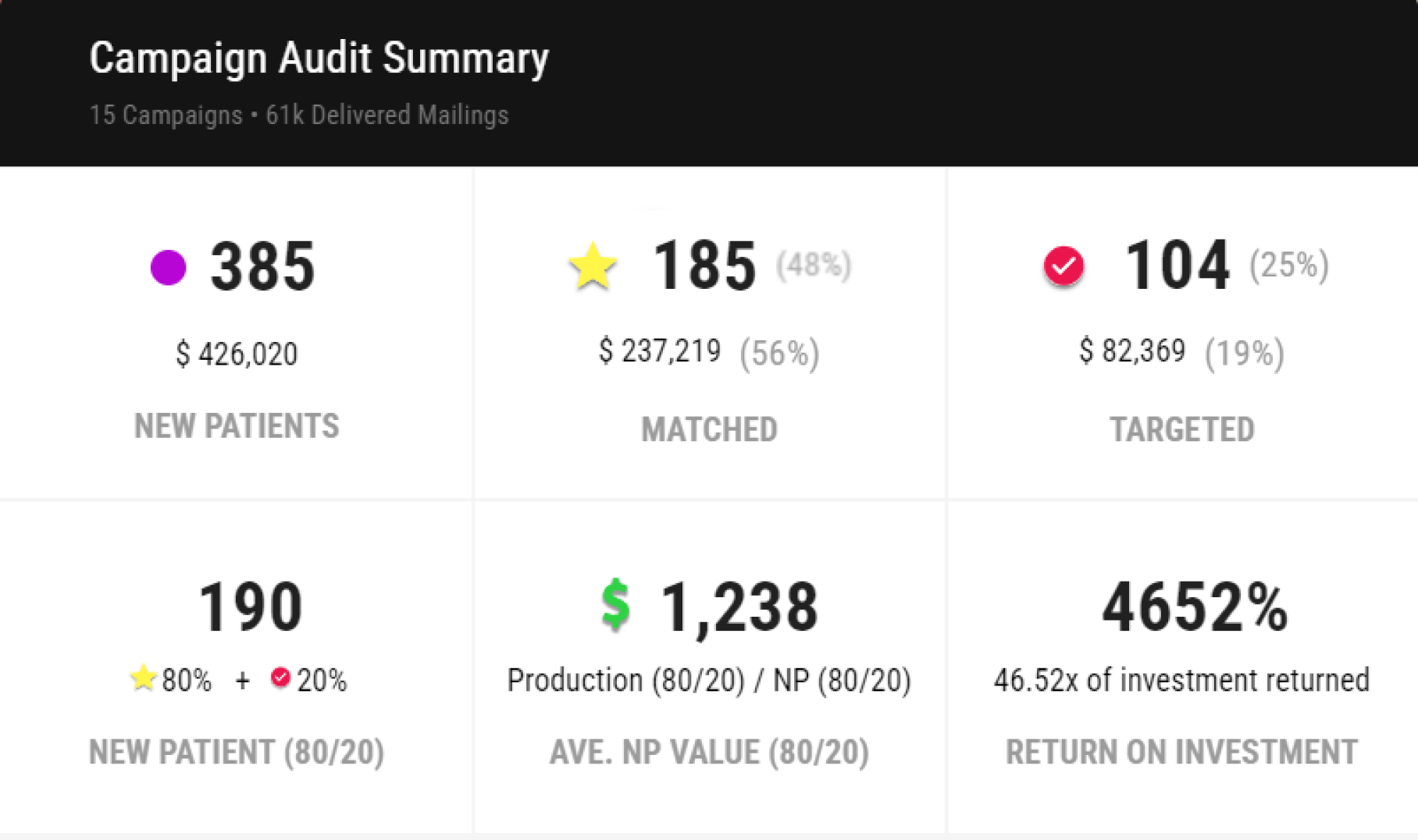
Early KPI expectations (first 60–90 days):
- Call volume consistency over spike-based results
- Cost per new patient within sustainable range (not “promo inflated”)
- Conversion quality: booked appointments, not just inquiries
Within the first few drops, response patterns validated the strategy. Not viral. Not explosive. Predictable. That’s the goal.
Once Redwood Dental proved that direct mail marketing could generate real demand, the next challenge was scale but not the reckless kind. In constrained markets, growth isn’t about reaching more people. It’s about reaching the right people, repeatedly, until familiarity turns into trust.
We’ve seen this pattern play out across dental practices nationwide: the ones that win don’t chase novelty. They commit to rhythm.
Geographic Reality Check: Marketing Inside a Mountain Bowl
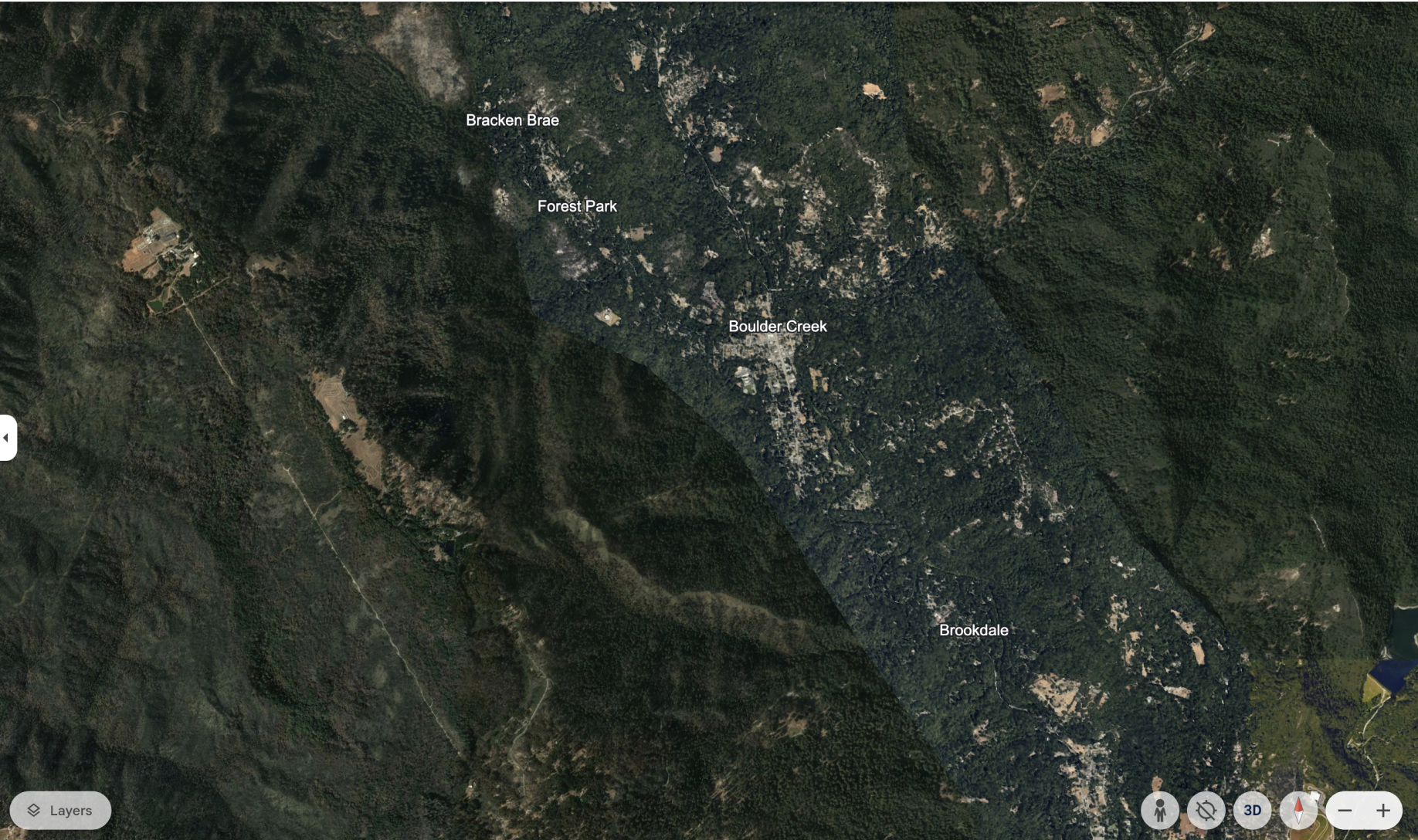
Redwood Dental’s location near Boulder came with a hard ceiling. Mountains limit drive time. Roads limit convenience. Patients aren’t willing to cross terrain for routine care, no matter how strong the offer is.
Instead of fighting that reality, the strategy leaned into it.
The direct mail campaign focused on 10,000 total households, segmented into three tightly defined areas:
- Primary Area A: 5,000 homes
- Primary Area B: 5,000 homes
- Secondary Area C: Smaller, rotated in periodically
This wasn’t random batching. Each area was mapped based on:
- Actual drive-time, not straight-line radius
- Household stability (owner-occupied vs. transient rentals)
- Demographic fit for comprehensive dentistry
We’ve seen practices overextend here—adding zip codes just to “feel bigger.” That usually spikes cost per patient and tanks ROI. Redwood Dental stayed disciplined.
Mailing cadence followed a repeating pattern:
1, 2, 1, 2, 3 — then repeat.
This ensured:
- No area went cold
- Message fatigue stayed low
- The practice could handle inbound demand without bottlenecks
From a KPI standpoint, this cadence stabilized:
- Monthly new-patient calls
- Front desk workload
- Chair utilization
Predictability became a competitive advantage.
Consistency Over Cleverness: The Offers That Actually Converted
Here’s an unpopular truth in dental marketing: patients don’t want novelty, they want reassurance.
From day one, Redwood Dental’s direct mail messaging stayed focused on two core value drivers:
- Larger, comprehensive cases
- The in-house membership plan
No rotating gimmicks. No “limited-time-only” chaos.
We’ve seen this happen repeatedly: when practices constantly change offers, response rates fragment. Staff can’t explain them. Patients don’t remember them. Trust erodes.
By keeping offers consistent, Redwood Dental achieved something more valuable than a short-term spike, brand recognition.
Households began to recognize:
- The practice name
- The value proposition
- The tone of care
This matters more than most metrics. Direct mail works best as frequency media, not a one-shot promotion.
Observed performance trends over time:
- Lower cost per acquisition after repeated drops
- Higher-quality calls (fewer price shoppers)
- Increased acceptance of comprehensive treatment plans
We’ve seen this exact flywheel before. Familiarity lowers friction. Lower friction raises conversion.
Continuous Optimization: Why the Campaign Didn’t Stall After Early Wins
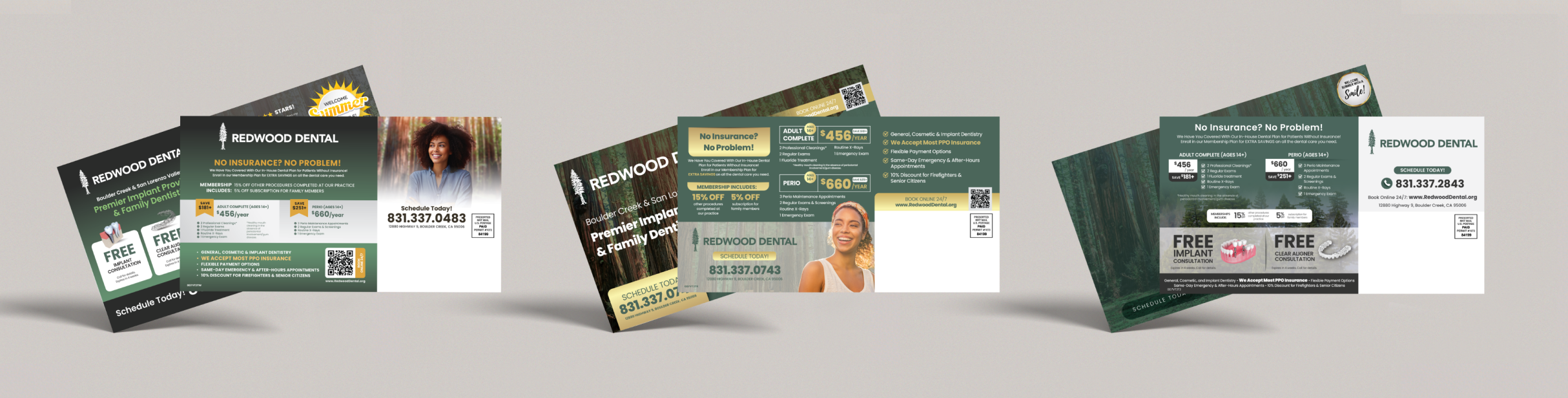
One of the biggest risks in direct mail marketing is complacency. Campaigns that “work” often decay quietly if they’re not audited.
Redwood Dental avoided that trap.
Mailing performance was reviewed regularly to:
- Adjust boundaries as population patterns shifted
- Reallocate volume between Areas A, B, and C
- Identify saturation points before response dipped
Importantly, changes were incremental, not reactive. We didn’t tear up the strategy every quarter. We refined it.
We’ve seen practices panic at minor fluctuations and blow up systems that were actually healthy. Redwood Dental stayed focused on long-term averages, not week-to-week noise.
Operational KPIs monitored alongside marketing:
- Show rate on mail-driven appointments
- Treatment acceptance percentage
- Capacity strain on hygiene vs. restorative
This ensured marketing didn’t outpace operations, a mistake that quietly kills growth.
Results, ROI, and What This Means for Other Practices
By the time Redwood Dental reached marketing maturity, the results were no longer anecdotal, they were operationally visible. Chairs stayed filled. The phone rang consistently. Growth stopped feeling fragile.
This is where direct mail marketing proves its real value: not in one-off wins, but in compounding outcomes.
Measurable Outcomes: What Predictable Marketing Actually Delivered
Over time, Redwood Dental saw steady, repeatable gains that aligned with what we’ve observed across similar post-acquisition practices.
New patient acquisition
Direct mail became the primary driver of first-time patient calls. Not just more calls but better ones. Patients arrived informed, primed by repeated exposure, and far more likely to book and show.
Revenue quality
Because the campaign emphasized comprehensive care and the in-house membership plan, the practice avoided the common “coupon trap.” Production per new patient increased as trust and case acceptance improved.
Operational stability
Perhaps the most underrated win: calm. With predictable inbound volume, staffing, scheduling, and supply decisions became proactive instead of reactive. We’ve seen how chaotic growth burns teams out. Redwood Dental avoided that entirely.
ROI consistency
Rather than chasing headline ROI from a single drop, the practice focused on rolling averages. Over time, cost per new patient stabilized within a sustainable range, allowing marketing spend to scale without anxiety.
Timeline snapshot (realistic expectations):
- 0–60 days: Validation of message and geography
- 3–6 months: Stable monthly new-patient flow
- 6–12 months: Compounding ROI and brand recognition
We’ve seen this curve repeatedly. When direct mail is treated as infrastructure, not a promotion, it performs like one.
Why This Case Study Matters (and Why It’s Repeatable)
The Redwood Dental case study isn’t impressive because of luck or a unique market. It’s impressive because it followed fundamentals most practices skip:
- Geographic discipline over “reach”
- Message consistency over creativity
- Systems over tactics
Post-COVID, we’ve seen dozens of practices attempt to rebuild with fragmented digital strategies that never quite lock in. Redwood Dental chose a channel that rewarded patience and structure and it paid off.
This isn’t just a dental story. It’s a reminder that boring, repeatable marketing beats flashy, fragile marketing every time.
Final Thoughts: From Uncertainty to Control
Redwood Dental started with no records, no data, and no momentum. Today, it operates with clarity, confidence, and a predictable growth engine powered by direct mail marketing.
We’ve seen this happen again and again: when practices stop chasing attention and start building presence, results follow.
If you’re reopening, acquiring, or scaling a practice and you want patient growth you can actually plan around, this model works when executed correctly.
Want to see how this could look for your practice?
Visit our website to learn more about our direct mail marketing approach, or schedule a demo to see how we build predictable new-patient systems for practices like yours.
Tags
Data and Analytics
Frequently Asked Questions
Related case study




Ready For Your Success Story?
Get 500 Free Handout cards shipped right to your doorstep!