What Is Automated Direct Mail?
Automated Direct Mail boosts response rates up to 9% with smart triggers and personalization. Build a predictable pipeline, schedule your demo today.

Emily Duke
marketing manager
·12 min read
·Mar 19, 2025


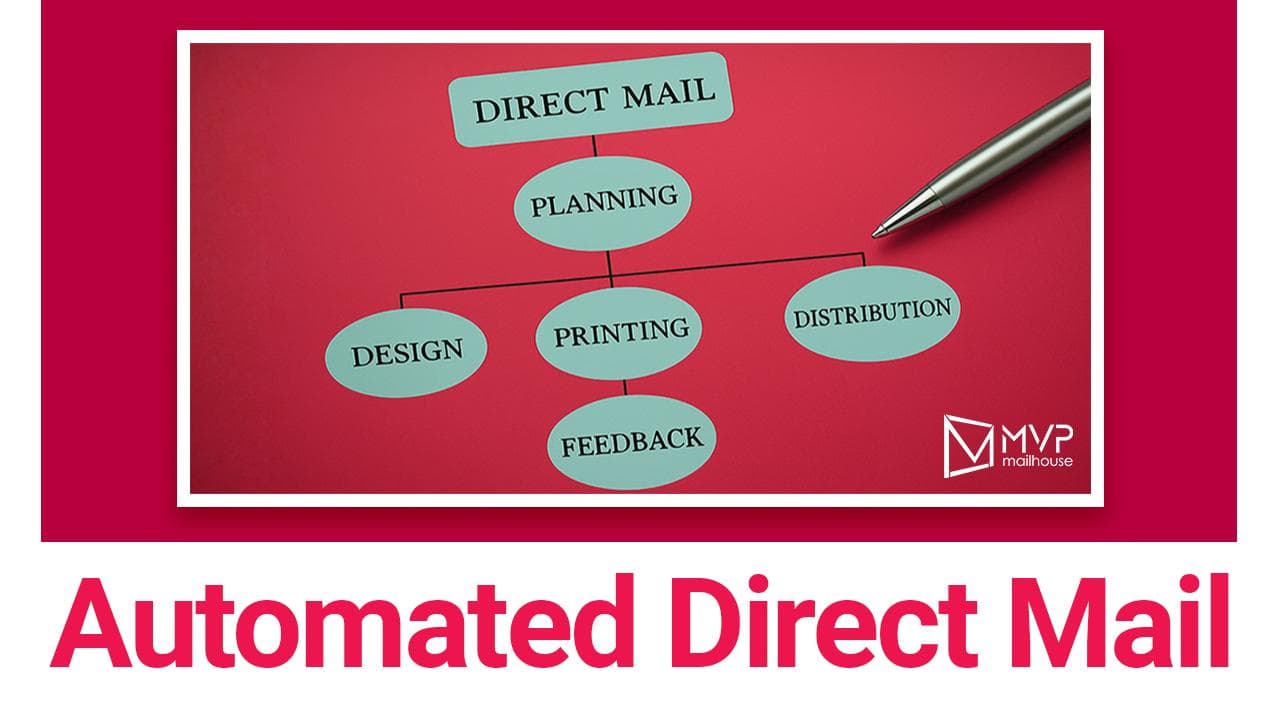
Automated Direct Mail is the process of sending physical mail: postcards, letters, brochures, or promotional pieces triggered automatically by data, behavior, or predefined workflows rather than manual scheduling.
In 2025, the average direct mail response rate across industries was about 4.4%, significantly outperforming email marketing’s roughly 0.12% average response rate showing direct mail’s strength in driving real engagement and action. (Direct mail response benchmarks show direct mail averages 4.4% compared with email’s 0.12% response rate.)
And here’s why that matters.
According to industry response benchmarks, direct mail response rates can reach 5–9% for house lists, significantly outperforming most email campaigns. Yet most businesses still treat mail as a one-off, seasonal effort. Automated direct mail changes that. It makes physical mail behave more like digital marketing, predictable, triggered, measurable, and scalable.
In this guide, you’ll learn exactly what automated direct mail is, how it works, what Direct Mail Automation Software actually does, and why it’s becoming a core growth engine for industries like healthcare, home services, and especially direct mail for dentists.
Automated Direct Mail vs. Traditional Direct Mail
Traditional direct mail is campaign-based. You pick a list, design a piece, send it out, and wait.
Automated direct mail is system-based.
Instead of manually launching each campaign, you build workflows that trigger mail based on:
- A new lead submission
- An abandoned online form
- A missed appointment
- A recent move into a target ZIP code
- A specific patient lifecycle stage
Then the system handles everything, data processing, printing, personalization, and mailing without you touching it again.
We’ve seen this happen countless times: a dental practice sends quarterly “new mover” postcards manually and gets modest results. When that same practice switches to automated triggers mailing within 48–72 hours of a home purchase, response rates jump significantly because timing aligns with intent.
Timing is leverage. Automation makes timing consistent.
If you need a broader foundation first, our breakdown of What is Direct Mail Marketing explains the fundamentals behind why physical mail still works in a digital-first world.
How Automated Direct Mail Works (Step-by-Step)
Automated Direct Mail isn’t complicated but it is structured. At its core, it connects three systems: data, creative, and fulfillment.
1. Data Triggers the Campaign
Automation starts with data inputs. These may come from:
- Your CRM
- Practice management software
- E-commerce platforms
- New mover databases
- Marketing platforms
When a defined condition is met (for example, “new patient inquiry submitted”), the automation fires.
This is where targeting becomes powerful. Smart campaigns are built on segmentation, not mass blasting. If you want to understand targeting mechanics deeper, our guide to Direct Mail Targeting walks through how to refine audiences strategically.
2. Personalization Happens Automatically
Modern automation integrates variable data printing, meaning each piece can include:
- Recipient name
- Location-based messaging
- Custom offers
- Appointment reminders
- Dynamic imagery
Personalization is not cosmetic, it drives results. Studies show personalized direct mail can lift response rates by 30% or more compared to static mailers.
If you're unfamiliar with how personalization is technically executed, see our article on What Is Variable Data Printing. It explains why industries like dental marketing rely heavily on it.
3. Print and Fulfillment Are Handled Automatically
Once triggered, the system sends the approved artwork and data to print. Production begins immediately.
No email chains.
No uploading spreadsheets.
No manual batching.
For dental practices running recall campaigns, for example, we’ve seen automated reminders consistently outperform manual quarterly recall pushes because mail goes out in steady, predictable waves rather than in chaotic bursts.
4. Results Are Tracked and Measured
This is where automated direct mail differs most from old-school mail.
Modern platforms allow you to track:
- Delivery timing
- Response rate
- Cost per acquisition
- ROI per segment
You’re not guessing. You’re optimizing.
To understand which metrics matter most, review our overview of What Are Direct Mail KPIs. It clarifies the benchmarks that separate average campaigns from profitable ones.
What Is Direct Mail Automation Software?
Direct Mail Automation Software is the technology platform that connects your data to printing and mailing systems automatically.
Think of it as the bridge between your CRM and the mailbox.
A robust platform typically includes:
- CRM integrations
- Trigger-based workflows
- Real-time address verification
- Variable data personalization
- Campaign dashboards and reporting
- API connections for custom systems
For dental practices, this often integrates directly with practice management software so recall reminders, treatment plan follow-ups, or lapsed patient campaigns can run automatically.
And this is important: automation software doesn’t replace strategy. It amplifies it.
We’ve seen businesses invest in automation tools without building a clear segmentation plan. The result? Efficiently sending the wrong message.
Automation multiplies what you feed it. If the targeting and offer are strong, performance compounds. If they’re weak, inefficiencies compound just as fast.
That’s why understanding analytics matters. If you're serious about performance-driven campaigns, our article on What is Data Analytics in Direct Mail Marketing explains how data transforms mail from expense to asset.
Why Automated Direct Mail Is Growing
Marketing automation software adoption has grown steadily over the past decade, but direct mail automation has accelerated particularly in industries where trust and physical presence matter.
Healthcare. Financial services. Home services. And especially dental.
Digital ads are crowded. Email inboxes are saturated. But a well-timed, personalized postcard still commands attention on a kitchen counter.
For dental marketing specifically, automation allows practices to:
- Capture new movers automatically
- Trigger appointment reminders
- Re-engage inactive patients
- Promote high-value procedures at the right lifecycle stage
If you’re exploring performance in this niche, our analysis of Does Direct Mail Still Work for Dentists breaks down real-world outcomes.
Benefits of Using Direct Mail Automation
The Benefits of Using Direct Mail Automation are not theoretical. They show up in speed, consistency, response rates, and long-term ROI.
We’ve seen practices go from sporadic, manually managed mail drops to predictable, revenue-producing systems within 60–90 days. The difference isn’t just efficiency, it’s compounding performance.
Let’s break down what that actually looks like.
1. Faster Timing = Higher Response Rates
Speed is one of the most underestimated performance drivers in direct mail.
When a campaign is triggered within 24–72 hours of a behavior—like a new mover entering a neighborhood or a patient missing an appointment—response rates increase because relevance is still high.
For example:
- A dental practice targeting new homeowners manually once per quarter may see modest engagement.
- That same practice mailing automatically within days of a recorded move often sees a noticeable lift in call volume.
We’ve seen this happen repeatedly. The closer you align mail timing with intent, the less you have to discount to drive action.
Automation removes delay. No batching. No waiting for a “big enough list.” Just consistent execution.
2. Consistent Patient or Customer Flow
Manual campaigns create spikes.
Automated systems create pipelines.
Instead of mailing 10,000 pieces at once and hoping the phones ring, automation sends smaller waves continuously based on triggers. That means steadier inbound volume and easier operational forecasting.
For dental practices, this is critical.
In direct mail for dentists, predictable new patient flow allows for better scheduling, staffing alignment, and revenue planning. We’ve seen automated recall and reactivation campaigns generate:
- 3–7% reactivation rates from dormant lists
- 5–9% response rates from well-targeted new mover lists
- Measurable lift in hygiene reappointments within one recall cycle
When campaigns are always running in the background, growth becomes less dependent on one “big promotion.”
3. Stronger Personalization at Scale
Personalization increases response but manually customizing thousands of pieces is impractical.
Automation solves that.
With integrated workflows, every postcard or letter can reference:
- The patient’s last visit date
- A recommended treatment
- A geographic neighborhood
- A time-sensitive offer
And it happens automatically.
This is especially powerful in direct mail for dental marketing, where trust and relevance drive conversions. A generic “We miss you” card performs differently than a message that references “It’s been 6 months since your last cleaning.”
That level of specificity builds credibility.
And credibility converts.
4. Better Measurement and ROI Clarity
Historically, one criticism of direct mail was tracking. Automation largely eliminates that issue.
Modern systems allow you to monitor:
- Delivery timing
- Response rates by segment
- Cost per acquisition
- Revenue per campaign
- Lifetime value from triggered mail
If you’re serious about performance, understanding how to calculate return matters. Our guide on How to Calculate ROI from Your Direct Mail Campaign breaks down the math behind profitable mail systems.
Here’s what we’ve observed in the field:
- Well-targeted automated campaigns often achieve ROI within the first 30–60 days.
- Higher-ticket procedures (like implants or cosmetic treatments) can generate 5x–10x return on properly timed offers.
- Reactivation campaigns frequently outperform cold acquisition on cost per patient.
Automation doesn’t guarantee ROI. But it makes ROI measurable and optimizable.
5. Operational Efficiency and Reduced Human Error
Manual direct mail campaigns require:
- Exporting lists
- Cleaning data
- Designing artwork
- Coordinating print
- Scheduling drops
- Tracking manually
That’s a lot of moving parts. And moving parts create friction.
Automation compresses that workflow into predefined systems. Once built, campaigns run with minimal oversight.
We’ve seen marketing managers reclaim 10–15+ hours per month simply by eliminating repetitive campaign setup tasks.
And here’s the hidden benefit: fewer mistakes.
No last-minute spreadsheet errors.
No mismatched personalization fields.
No missed send dates.
Consistency builds trust, not just with customers, but within your team.
6. Smarter Budget Allocation Over Time
Because automation produces steady performance data, you can refine investment intelligently.
Instead of guessing where to scale, you can evaluate:
- Which ZIP codes convert best
- Which offers drive highest case value
- Which patient segments respond most predictably
From there, budget shifts from “spray and pray” to precision.
This is where automated direct mail becomes a growth engine rather than a marketing expense.
And if you want to understand different mail formats you can automate from postcards to letters to dimensional mail our breakdown of Types of Direct Mail
explains which formats work best for different goals.
What Results Should You Realistically Expect?
Let’s be practical.
Automated Direct Mail is not a magic switch. It’s a system.
Most businesses see meaningful optimization within:
- 30 days for triggered campaigns to stabilize
- 60–90 days to refine targeting and messaging
- 3–6 months for predictable ROI modeling
KPIs to monitor include:
- Response rate (3–9% depending on list quality)
- Cost per acquisition
- Revenue per mail piece
- Lifetime value of acquired patients
- Reactivation percentage for dormant lists
When campaigns are aligned with smart targeting and compelling offers, automation doesn’t just maintain marketing performance, it compounds it.
Automated Direct Mail for Dentists (And How to Build a Sustainable System)
Let’s bring this home especially for healthcare and dental practices.
In direct mail for dentists, automation isn’t just about convenience. It’s about lifecycle control.
Dental marketing has predictable revenue triggers:
- New movers entering a service area
- Six-month hygiene recall cycles
- Missed appointments
- Unscheduled treatment plans
- Inactive patients (12+ months dormant)
Each of these moments represents revenue either captured or lost.
We’ve seen this happen: a practice invests heavily in paid ads but ignores its existing patient database. Meanwhile, thousands of past patients sit untouched. When automated recall and reactivation mail is layered in, hygiene production stabilizes within one to two cycles. That’s not theory. That’s operational leverage.
Automation ensures no segment falls through the cracks.
A Practical Framework for Dental Marketing Automation
If you’re implementing Automated Direct Mail in a dental practice, start with structure, not software.
Here’s a simple rollout framework we’ve seen work consistently:
Phase 1 (First 30 Days): Stabilize Core Triggers
- New mover acquisition
- 6-month recall reminders
- Missed appointment follow-ups
These are predictable and easy to automate.
Phase 2 (60–90 Days): Layer Revenue Expansion
- Treatment plan follow-ups
- High-value service promotions (implants, Invisalign, cosmetic work)
- Reactivation campaigns for 12–24 month dormant patients
Phase 3 (3–6 Months): Optimize and Scale
- Refine ZIP code targeting
- Adjust offer positioning
- Track revenue by mail segment
- Improve cost per acquisition
The key isn’t complexity. It’s consistency.
And if you’re questioning whether mail still performs in this niche, the data says yes. But strategy matters. Strong targeting plus timing plus personalization is what moves the needle.
Conclusion: Automated Direct Mail Is a System, Not a Campaign
Let’s summarize what we’ve covered.
Automated Direct Mail transforms traditional mail from a periodic campaign into a continuous, data-driven growth system.
It works by:
- Triggering mail based on behavior or lifecycle stages
- Personalizing content at scale
- Automating print and fulfillment
- Tracking measurable KPIs and ROI
The benefits are tangible:
- Faster timing and stronger response rates
- Predictable inbound flow
- Improved operational efficiency
- Clear ROI tracking
- Scalable long-term growth
For dental practices and other service-based businesses, automation reduces revenue volatility. Instead of hoping marketing works this month, you build a framework that runs every month.
That’s the difference.
We don’t view automated mail as an experiment. We view it as infrastructure.
If you’re ready to move beyond sporadic campaigns and build a system that consistently drives patients and revenue, visit our website at MVP Mailhouse to learn more or schedule a demo to see how Automated Direct Mail can integrate directly into your current workflow.
Because when mail runs automatically and strategically, growth stops being accidental.
Tags
Direct Mail Strategies
Frequently Asked Questions
Related blog



Ready For Your Success Story?
Get 500 Free Handout cards shipped right to your doorstep!